
The word detox is everywhere, often associated with juice cleanses, fasting protocols, supplements, and restrictive diets designed to “flush toxins” from the body. But your body already has sophisticated natural detoxification pathways working around the clock. Through the coordinated actions of certain systems, metabolic waste and compounds encountered through food, medications, alcohol, pollution, household products, and the environment are continuously processed. Rather than relying on extreme detox programs, the goal should be to support these built-in systems through proper nutrition, hydration, movement, sleep, healthy elimination, and lifestyle habits that reduce unnecessary exposures.
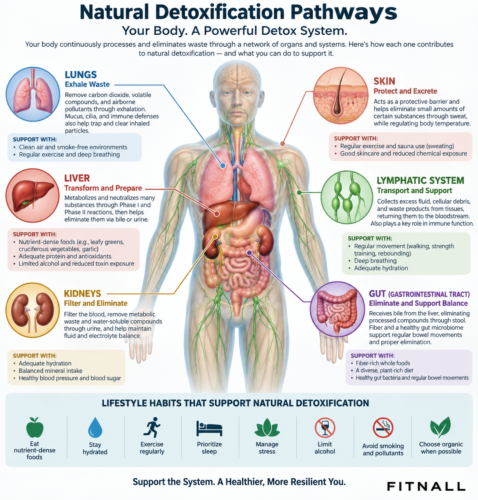
Every day, your cells process substances produced through normal metabolism as well as other compounds. Specialized organs and enzyme systems transform, neutralize, package, and eliminate many of these substances. Your liver, kidneys, gastrointestinal tract, lungs, lymphatic system, and skin all contribute to the detox process. By understanding your body’s natural detoxification pathways, you can create the conditions that allow them to function effectively.
What Does Detoxification Actually Mean?
In biological terms, detoxification refers broadly to the processes through which the body transforms and eliminates potentially harmful or unnecessary substances.
These substances may originate outside the body, including environmental chemicals, alcohol, medications, smoke, and certain compounds in food. Others originate inside the body as normal byproducts of metabolism. Your body has sophisticated mechanisms for handling these compounds.
Natural Detoxification Pathways
Rather than simply “flushing” toxins out, the body frequently has to chemically transform substances before they can be safely eliminated. The liver is particularly important because it contains enzyme systems capable of modifying many fat-soluble compounds so they can eventually become easier to excrete through urine or bile. But detoxification is not the job of one organ. Several systems run coordinated processes to detox.
The Liver: The Body’s Major Processing Center
The liver is one of the body’s primary natural detoxification pathways. Blood arriving from the digestive tract passes through the liver, where nutrients, medications, hormones, alcohol, and numerous other compounds can be metabolized.
Liver detoxification occurs through several phases:
Phase I: Transformation
During Phase I, enzymes, particularly those belonging to the cytochrome P450 family, chemically modify many compounds. These reactions include oxidation, reduction, and hydrolysis.
The purpose is not necessarily to eliminate the substance immediately. Instead, Phase I often changes its chemical structure so that it can undergo additional processing. Some intermediate compounds produced during this phase may be more reactive than the original substance. This is one reason the body’s antioxidant defenses and subsequent detoxification pathways are important.
Phase II: Conjugation
During Phase II, the liver attaches other molecules to compounds produced during Phase I or directly to substances requiring elimination.
Major conjugation pathways include glucuronidation, sulfation, glutathione conjugation, methylation, acetylation, and amino acid conjugation. These reactions generally make compounds more water-soluble and easier for the body to eliminate. Nutrients and dietary compounds are involved in maintaining the enzymes and antioxidant systems supporting these pathways.
Phase III: Transport and Elimination
After compounds have been transformed and conjugated, they still need to leave the cells and eventually the body.
Transport proteins help move metabolites into bile, blood, or urine, allowing them to be eliminated primarily through the gastrointestinal tract or kidneys. This final step is important. Detoxification is not complete simply because a chemical has been transformed. The resulting metabolites must ultimately be transported and excreted.
The Kidneys: Filtering the Blood
Your kidneys continuously filter the blood and help regulate fluid balance, electrolytes, acid-base balance, and blood pressure. They also remove many metabolic waste products and water-soluble compounds through urine.
Among the substances normally eliminated by the kidneys are:
- Urea produced from protein metabolism
- Creatinine produced from muscle metabolism
- Excess electrolytes
- Metabolites of medications and other compounds
- Various water-soluble waste products
Adequate hydration helps maintain normal kidney function, although drinking excessive amounts of water does not necessarily accelerate detoxification. The goal is appropriate hydration, not forcing enormous quantities of fluids through the body.
The Gut: An Important Exit Route
The gastrointestinal tract is another major component of the body’s detox and elimination system. The liver releases bile into the digestive tract. Bile helps digest fats, but it also carries cholesterol, bilirubin, and various compounds that the liver has processed for elimination. These substances can then leave the body through stool.
Regular bowel movements support one of the body’s normal routes of waste elimination. Fiber is particularly important since it supports bowel regularity and feeds beneficial intestinal bacteria. Certain fibers can also bind compounds within the digestive tract and influence their excretion.
The gut microbiome adds another layer to the process. Intestinal microorganisms can metabolize numerous dietary and endogenous compounds and may influence whether certain metabolites are eliminated or reabsorbed. This enphasizes that detoxification and gut health are closely interconnected.
The Lungs: Detoxification With Every Breath
Your lungs are constantly exchanging gases between your body and the environment. Carbon dioxide is produced during cellular metabolism and transported through the bloodstream to the lungs, where it is removed every time you exhale.
The respiratory system also contains protective mechanisms, including mucus, cilia, and immune defenses, that help trap and remove inhaled particles. Healthy lung function, regular physical activity, breathing exercises, and reduced exposure to smoke and air pollutants help support this detox system.
The Lymphatic System: Supporting Fluid and Immune Balance
The lymphatic system is another natural detoxification pathway. Lymphatic vessels collect excess fluid, proteins, cellular debris, and other materials from tissues and return fluid to the bloodstream. Lymph nodes also play essential roles in immune surveillance.
Unlike the cardiovascular system, the lymphatic system does not have a central pump like the heart. Muscle contractions, breathing, and physical movement help propel lymph through lymphatic vessels. This is another reason regular movement matters for internal health.
Walking, rebounding, strength training, mobility work, and other forms of physical activity support circulation and lymphatic flow while providing many additional metabolic benefits.
The Skin: A Protective Barrier
The skin’s primary role in detoxification is protection. Healthy skin forms a barrier between your internal environment and the outside world. However, sweating is another detox mechanism, allowing certain substances to be released.
Saunas and exercise can certainly promote sweating while providing cardiovascular, relaxation, or heat-adaptation benefits. However, sweating should not be viewed as a replacement for liver detoxification.
Antioxidant Defense and Detoxification
Detoxification and antioxidant defense are closely connected. Normal metabolism and certain detoxification reactions can generate reactive oxygen species. The body therefore maintains sophisticated antioxidant systems to help control oxidative stress.
One important antioxidant is glutathione. Glutathione participates directly in certain Phase II conjugation reactions and helps protect cells against oxidative damage. The body produces glutathione from amino acids, particularly cysteine, glutamate, and glycine. Adequate nutrition and antioxidant supplementation support your body’s antioxidant network.
Foods That Support Natural Detoxification Pathways
No single food “detoxifies” the body. However, nutrition provides the raw materials needed for normal liver metabolism, antioxidant defenses, bowel function, and cellular repair. A diet emphasizing a variety of minimally processed foods supports natural detox.
Cruciferous Vegetables
Broccoli, cauliflower, Brussels sprouts, cabbage, kale, and similar vegetables contain glucosinolates that are metabolized into biologically active compounds, including sulforaphane.
These compounds have been studied for their effects on cellular defense and detoxification-related enzyme systems.
Allium Vegetables
Garlic, onions, leeks, and shallots contain sulfur-containing compounds that participate in numerous biological processes.
Protein
Adequate dietary protein supplies amino acids needed for enzymes, tissue repair, antioxidant systems, and several conjugation pathways.
Fiber
Organic vegetables, fruits, legumes, seeds, nuts, and whole grains provide fiber that supports bowel regularity and the gut microbiome.
Colorful Plant Foods
Berries, leafy greens, herbs, spices, citrus fruits, and other colorful plants provide polyphenols and micronutrients that support cellular defense systems. Variety matters more than relying on a single supposed “detox superfood.”
Lifestyle Habits That Support Detoxification
Your body’s detoxification capacity is influenced not only by what you eat but also by your overall lifestyle.
Reduce Your Toxic Load
One of the most overlooked ways to support the body’s detoxification systems is simply to reduce unnecessary exposure to toxins. You cannot eliminate every environmental chemical from your life. However, reasonable strategies can reduce avoidable exposures.
These may include improving indoor ventilation, following workplace safety practices around chemicals, avoiding conventional mattresses, and using non-toxic household products, clean beauty and skincare.
Additionally, drinking filtered water and choosing organic foods decreases exposure to heavy metals, synthetic pesticides, herbicides, and hormones. This lowers the amount of compounds the body must process and eliminate. Choosing organic may be especially worthwhile for foods you eat frequently.
The objective should not be toxin fear but reducing unnecessary exposures while supporting the body’s normal capacity to detox what it encounters.
Exercise
Physical activity supports circulation, insulin sensitivity, cardiovascular health, bowel motility, and lymphatic movement. Increased blood flow helps deliver oxygen and nutrients to tissues while transporting metabolic byproducts to organs responsible for processing and elimination. Regular exercise also supports metabolic health and healthy body composition, which contribute to efficient physiological function.
Hydration
Water is necessary for kidney function, digestion, circulation, and countless metabolic reactions. Adequate hydration allows the kidneys to filter the blood and excrete water-soluble waste products through urine. Adequate fluid intake also supports healthy digestion and helps fiber promote regular bowel movements.
Restorative Sleep
Sleep supports neurological, hormonal, immune, and metabolic regulation. The brain also has a specialized waste-clearance network often referred to as the glymphatic system, which appears to be particularly active during sleep. Consistently getting adequate, restorative sleep therefore supports both brain health and the body’s broader maintenance and recovery processes.
Regular Bowel Movements
Adequate fiber, hydration, movement, and a healthy dietary pattern support gastrointestinal elimination. Because the liver releases certain processed compounds into bile, which enters the intestinal tract, regular bowel movements provide an important route for their eventual removal. Supporting gut health and healthy intestinal transit is therefore an important part of the body’s natural detox process.
Limit Excessive Alcohol Consumption
Alcohol is primarily metabolized by the liver, and excessive intake places additional demands on this organ. Chronic heavy alcohol consumption can contribute to inflammation, fat accumulation, and liver damage, potentially compromising normal liver function. Reducing alcohol intake gives the liver less alcohol to process while supporting overall metabolic health.
Avoid Smoking and Unnecessary Pollutants
Tobacco smoke and environmental pollution can expose the body to numerous chemicals that must be managed by its protective and elimination systems. Reducing exposure lowers the body’s overall burden while also protecting the lungs, cardiovascular system, and other tissues. Avoid smoking and secondhand smoke when possible, and minimize unnecessary exposure to fumes, harsh chemicals, and heavily polluted environments.
Manage Chronic Stress
Chronic stress can affect sleep, digestion, immune function, eating patterns, and metabolic regulation. Supporting detoxification is therefore part of a larger mind-body approach rather than an isolated nutritional intervention.
Sauna and Heat Exposure
Sweating is another supportive natural detoxification pathway. Besides regulating body temperature, sweating can also remove small amounts of certain metals and environmental compounds. Sauna use increases circulation and induces substantial sweating, which may provide an additional route of excretion while supporting cardiovascular function and relaxation.
Regular sauna use has also been associated with several cardiovascular and metabolic health benefits. Just be mindful to stay hydrated and replace electrolytes lost through heavy sweating when using a sauna. Dr, Ardis Hydrate Complete has appropriate amounts of sodium and potassium, minimal added sugar, no artificial colors or unnecessary additives, plus 11 minerals, 11 vitamins, 17 amino acids, and Betaine [Use Coupon code: FITNALL to get 10% OFF]
Targeted Supplementation
Certain nutrients and plant compounds may support natural detox and antioxidant systems and help mitigate the negative effects of toxin burdens.
- Milk Thistle: A flavonoid in milk thistle, silymarin, has hepatoprotective and antioxidant properties
- Curcumin: Curcumin, the primary compound extracted from turmeric root, may support Phase II detoxification enzymes such as glutathione-S-transferase
- Glutathione: Glutathione plays an important role in neutralizing reactive compounds and conjugating substances for elimination
- Vitamin C: Vitamin C provides antioxidant support while helping regenerate glutathione
- N-acetylcysteine (NAC): NAC provides cysteine, a precursor for glutathione synthesis, helping the body maintain its endogenous glutathione antioxidant system. NAC also has direct antioxidant activity and is used medically in specific circumstances because of its ability to restore glutathione
- Sulforaphane: Sulforaphane, a bioactive compound derived from cruciferous vegetables, particularly broccoli sprouts, activates the Nrf2 pathway, which regulates numerous antioxidant and cellular-defense genes, including Phase II detoxification enzyme
- Selenium: Selenium is an essential mineral required for several antioxidant enzymes, including glutathione peroxidases, which use glutathione to help neutralize peroxides and protect cells from oxidative damage
- Alpha-Lipoic Acid (ALA): ALA functions in cellular energy metabolism and has antioxidant properties. It can also contribute to the regeneration of other antioxidants, including glutathione and vitamins C and E.
Keep in mind that supplements should complement, not replace, a nutrient-dense diet and natural detoxification pathways.
Cleanse
You already know our water, conventional food, and environment are loaded with contaminants. A well-designed cleansing protocol, at least once a year, can support your body’s natural detoxification pathways and lower toxic load, but only if you do it the right way.
Research shows that detox protocols produced a significant drop in red blood cell toxic metals, urine porphyrins, and urine mutagenicity, along with a rise in D-glucaric acid. Together, these shifts make metabolic detox pathways more efficient and assist in the elimination or neutralization of stored toxins. Meaningful changes across multiple detoxification biomarkers and improved scores for quality of life, general health, and overall well-being have also been reported.
Stimulate Your Lymphatic System
- Try Rebounding: Rebounding, or gently bouncing on a mini-trampoline, combines rhythmic muscle contractions with movement that can help promote circulation and lymphatic flow, supporting the body’s natural fluid transport and waste clearance processes.
- Incorporate Dry Brushing: Dry brushing involves gently brushing the skin toward the heart with a natural-bristle brush, exfoliating dead skin cells, temporarily increasing circulation at the skin’s surface, and stimulating lymphatic flow.
- Consider Lymphatic Drainage Massage: This gentle massage technique uses light, strategic pressure to encourage lymph fluid to move from the tissues toward functioning lymph vessels and lymph nodes, supporting normal lymphatic flow and helping reduce excess fluid buildup and swelling. Because the lymphatic system helps transport cellular debris, excess fluid, and other materials from tissues back into circulation for eventual processing and elimination, lymphatic drainage massage can be another way to support this natural transport system
Detoxification Is a Daily Biological Process
The most important shift is to stop thinking about detoxification as a temporary event. Your body is managing metabolic waste and environmental exposures 24 hours a day. That means the best detoxification strategy is a lifestyle that consistently provides the body with what it needs.
Consume adequate protein and micronutrients, fiber-rich whole foods, stay hydrated, move daily, have restorative sleep, keep your digestive system on track, stimulate your lymphatic system, limit alcohol, reduce exposure to harmful substances, and ensure sufficient recovery.
The FITNALL Approach
The FITNALL Method views health as the interaction of multiple systems rather than a collection of isolated symptoms. Natural detoxification fits within the Internal Health pillar because the efficiency of the body’s internal environment influences energy, recovery, metabolism, immune function, and overall resilience.
But internal health is also connected to the other FITNALL pillars. Fitness supports circulation, metabolic health, and lymphatic movement. Nutrition supplies the nutrients and fiber needed for normal metabolic and elimination pathways. Thought Patterns & Mindset influence everyday health decisions. Adaptation to Stress & Emotional Balance supports physiological regulation. Longevity Habits reduce cumulative health risks, while Lifestyle determines the exposures and behaviors repeated day after day.
The goal is to support the biological systems- your natural detoxification pathways- that are already helping eliminate substances that harm you. When nutrition, movement, sleep, hydration, digestion, stress regulation, and environmental awareness work together, detoxification becomes what it was always meant to be: an ongoing part of a healthy body.
Frequently Asked Questions About Natural Detoxification
The body relies primarily on the liver, kidneys, gastrointestinal tract, and lungs to transform and eliminate metabolic waste and potentially harmful compounds. The lymphatic system supports fluid balance and transport, while the skin provides an important protective barrier and can excrete small amounts of certain substances through sweat.
The liver uses specialized enzymes to metabolize many substances. These processes are often described as Phase I and Phase II detoxification, followed by transport and elimination. The liver transforms compounds and helps prepare them for removal through bile, stool, or urine.
Yes. You can support normal detoxification by eating a nutrient-dense diet with adequate protein and fiber, staying hydrated, exercising regularly, sleeping sufficiently, maintaining healthy bowel function, limiting excessive alcohol intake, managing stress, reducing unnecessary exposure to environmental contaminants, and cleansing.
Sweat is primarily used to regulate body temperature, but also to eliminate small amounts of certain metals and environmental compounds. Exercise and sauna use can increase sweating, but sweating should be considered a supportive route of excretion rather than the body’s primary detoxification mechanism.
Sauna use induces sweating and increases circulation, and some compounds can be excreted through sweat. Sauna bathing may also provide cardiovascular, relaxation, and other health benefits. Hydration is especially important with frequent or prolonged sauna use.
A varied whole-food diet provides nutrients needed for normal detoxification and antioxidant systems. Helpful foods include cruciferous vegetables, leafy greens, garlic, onions, berries, citrus fruits, legumes, nuts, seeds, herbs, spices, and quality protein sources. Fiber-rich foods also support regular bowel movements and the elimination of waste through the gastrointestinal tract.
Choosing organic foods can reduce dietary exposure to certain synthetic pesticide residues. This can be one practical way to reduce unnecessary environmental exposures, particularly for foods eaten frequently.
Cleanses can activate your detoxification systems.
Fiber promotes bowel regularity and supports a healthy gut microbiome. Because the liver sends certain processed compounds into bile for elimination through the digestive tract, healthy bowel function helps move these substances out of the body rather than allowing them to remain in the gastrointestinal system.
You can support your body’s detoxification systems every day. Eat an organic, nutrient-dense, fiber-rich diet, consume adequate protein, stay hydrated, exercise, sleep well, maintain regular bowel movements, limit excessive alcohol, avoid smoking, manage stress, sweat, and reduce unnecessary exposure to pollutants and other potentially harmful substances
To a Fitter Healthier You,
Mind-Body Optimization Specialist
About the Author
Adriana Albritton is a Mind-Body Optimization Specialist and founder of FitnAll Coaching. She developed the FITNALL Method, a holistic framework that integrates fitness, internal health, thought patterns, nutrition, adaptation, longevity, and lifestyle habits to support sustainable fat loss and long-term wellness. Adriana is the author of 28 Days to a New Life: A Holistic Program to Get Fit, Delay Aging, and Enhance Your Mindset. She speaks and writes about holistic performance, longevity, and the integration of mind and body for optimal health.