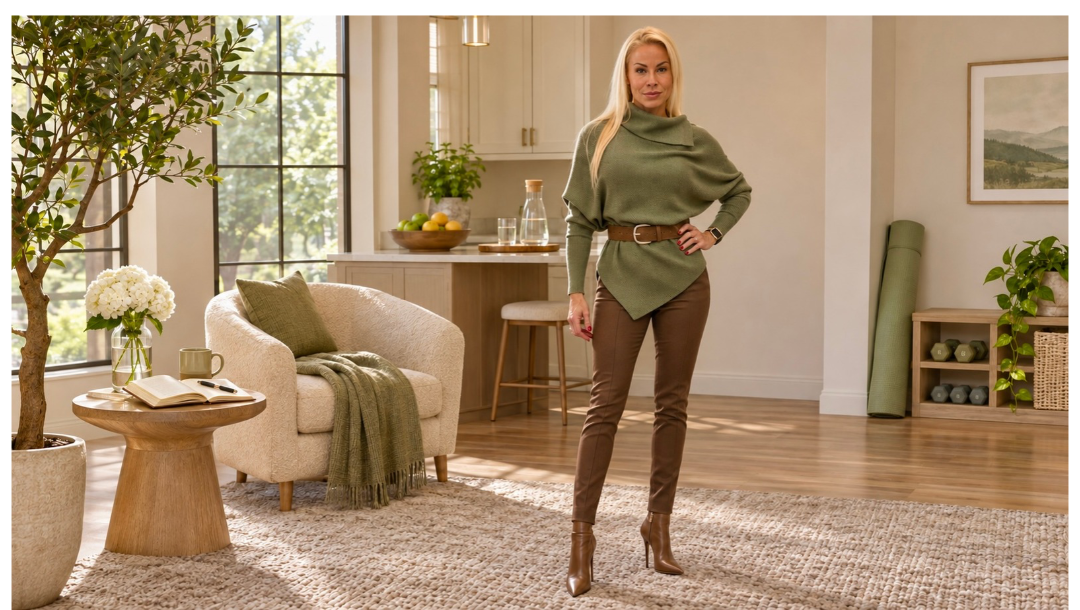
You plan to exercise, eat balanced meals, and spend less time on your phone. Then the day gets busy. Your workout clothes are buried in a drawer, dinner requires more preparation than you have energy for, and your phone is within reach every time you sit down. Before treating this as a lack of discipline, consider your surroundings and understand that your environment can give your intentions practical support. This is where environmental design comes into place. Environmental design for healthy habits means intentionally arranging your surroundings to support the behaviors you want to practice.
What Is Environmental Design for Healthy Habits?
Environmental design for healthy habits is the deliberate organization of physical and digital spaces to make desired actions easier to repeat. The aim is to build a setting that fits your goals, resources, and daily life.
In health and behavior change, it involves making helpful choices visible, accessible, and convenient while adding a little distance or effort to habits you want to interrupt.
It can be as simple as placing walking shoes beside the door, keeping ingredients for an easy meal available, or moving distracting apps off your phone’s home screen.
Three useful questions guide the process:
- What catches your attention? Visible objects and notifications can prompt you to act. Notice what you see first when you enter a room or unlock your phone. Place reminders of your desired habits where you will encounter them, such as a book beside your favorite chair or walking shoes near the door.
- What is easiest for you to do? Availability and preparation influence how much effort a choice requires. Ask whether your current setup makes your desired behavior convenient. Preparing meal ingredients or choosing your workout in advance removes steps you would otherwise need to complete when you are busy or tired.
- What do you repeatedly do here? A location or existing routine can become associated with a particular behavior. Notice whether sitting on the couch leads you to scroll or finishing dinner prompts you to snack. Use those familiar moments to practice a desired action, such as taking a short walk after dinner.
Environmental design can help reduce decision fatigue—the mental strain of making repeated choices—by making healthy options easier to find, prepare, and choose throughout the day.
Why Your Environment Matters for Behavior Change
Your desired intention needs the opportunity to become an action, and ultimately a habit. It’s easier to act on the desire to cook more often when you have usable counter space and ingredients for a familiar meal.
Research on habit formation helps explain why consistency matters. In a study of everyday eating, drinking, and activity behaviors, repeating an action in a consistent context was associated with increasing automaticity, doing it with less conscious deliberation. The time required varied considerably between people and behaviors.[1]
Food environments also influence choices. A Cochrane review found that placing food farther away reduced consumption of the targeted foods in the included studies.[2]
These findings support a practical approach to environmental design for healthy habits: change the conditions around a behavior, then observe whether that makes it easier to follow through. Yet, this does not mean that rearranging a room guarantees lasting health changes.
1. Make the First Step Easier
Work backward from the habit you want to practice and identify every step you need to take before you can begin. Look at what must happen before your desired action. Each preparation step is a potential stopping point, so look for ways to simplify it or complete it ahead of time.
- For exercise, you may need to find clothes, choose a workout, locate equipment, and clear space. Preparing those details ahead of time makes starting simpler.
- Try laying out your clothes, choosing tomorrow’s workout, or packing your gym bag the night before. If you exercise at home, keep a small, safe area ready for movement.
- Prepare for a busy day as well. Have a shorter workout option available so that limited time does not require making a new plan from scratch.
2. Arrange Your Kitchen Around Nourishment
A supportive kitchen makes satisfying meals easier to assemble. Start with the meals you actually enjoy and can afford to repeat.
- Keep convenient sources of organic protein, vegetables, fruit, and fiber-rich carbohydrates available. Frozen vegetables, canned beans, eggs, yogurt, and other practical staples can help, depending on your preferences and dietary needs.
- Place ready-to-eat foods you want to choose more often where you can see them. Keep frequently used cooking tools accessible, and save a short list of easy meals for demanding days.
- If you tend to eat directly from a package while working, try serving yourself a snack and putting the package away. This creates a pause to notice your appetite and make a deliberate choice.
In environmental design for healthy habits around your meals, the goal is adequate, enjoyable nourishment. An environment built around rigid restriction can become another source of stress.
3. Give Movement a Place in Your Day
Make room for movement beyond a formal workout, and adapt your setup to your mobility, space, and household needs.
- Place walking shoes near the exit, or keep a foam roller or mat for stretching somewhere accessible.
- Pair one manageable action with an existing routine: a brief walk after lunch, for example, or a few comfortable mobility exercises after shutting down your computer.
Choose a cue that already occurs reliably. “After lunch” may be easier to maintain than an exact time when your schedule varies.
4. Design Your Digital Environment for Focus
Environmental design for healthy habits also includes your devices, such as your phone and computer. Look at what they repeatedly invite you to do.
- Turn off nonessential notifications, close unrelated tabs before focused work, and move frequently distracting apps away from your home screen.
- During a task that needs your attention, try placing your phone beyond immediate reach while preserving access to essential calls.
- Make helpful tools easy to access, too. Keep your workout plan, grocery list, or journal somewhere you can open without searching.
Choose a specific change and test it. A simpler screen is useful when it helps you do what matters to you.
5. Create a Practical Transition Into Rest
An evening environment can support the routine you want to follow. You do not need an elaborate relaxation space. A chair, a book, and a clear stopping point for work may be enough to make your preferred evening routine easier to begin.
- Set up a comfortable place to read, put tomorrow’s essentials together, or establish a place to charge your phone away from the bed if that works for your circumstances.
- Prepare your sleeping environment by keeping your bedroom dark, quiet, and comfortably cool. Simple sleep hygiene practices can support a more restful night.
Environmental Design for Healthy Habits Audit
Choose one behavior and use this framework:
| Goal | Current obstacle | Environmental change |
|---|---|---|
| Exercise consistently | Getting ready takes too long | Pack a gym bag the night before |
| Eat balanced lunches | Nothing is ready at lunchtime | Prepare ingredients for two easy lunches |
| Scroll less during work | Phone is beside the keyboard | Place it beyond immediate reach and facing down |
| Walk more often | Walking is easy to forget | Put shoes by the door and walk after lunch |
| Journal regularly | Notebook is stored away | Keep it beside your usual evening seat |
Test one change for a week. Track whether you completed the behavior and whether starting felt easier. A week is a useful trial of your setup, not a deadline for forming a habit.
If it does not help, adjust the cue, simplify the action, or address a different obstacle.
Connect Your Environment With the Person You Want to Become
Environmental design for healthy habits gives your intention a practical expression. As you make an identity shift, arrange your surroundings to support the habits that reflect who you want to become, giving yourself daily opportunities to put that identity into practice.
If you want to become someone who exercises consistently, prepare a place and plan for movement. If you want to eat in a way that supports your health, keep realistic meal options available. Each setup creates an opportunity to practice the behavior associated with that identity. The change becomes long-lasting through what you repeatedly do.
Start by asking: What is one thing I can change today to make tomorrow’s healthy choice easier?
For support putting fitness, nutrition, mindset, and lifestyle habits into practice, explore the FITNALL AI App.
Frequently Asked Questions
Environmental design means arranging your physical and digital surroundings to make healthy behaviors easier to practice. Examples include preparing workout clothes in advance, keeping nutritious foods accessible, and reducing distracting phone notifications.
Your surroundings provide cues and affect how much effort an action requires. Walking shoes beside the door can remind you to take a walk, while having ingredients ready makes preparing a balanced meal more convenient.
Yes. Preparing your surroundings reduces the steps needed to get started, making it easier to follow through when motivation fluctuates. You still need to take action, but a supportive setup can make that action more manageable.
Keep ingredients for simple, satisfying meals available, place nutritious options where you can easily see and reach them, and organize cooking tools for convenient use. Choose a setup that supports your preferences, budget, and nutritional needs.
Yes. Your digital environment can support or interrupt your intentions. Turning off unnecessary notifications, moving distracting apps off your home screen, and keeping your workout plan easy to access are practical examples.
No. Start with one behavior and one small change, such as packing your gym bag before bed. Test whether the change makes following through easier, then adjust as needed.
A change can make a behavior easier immediately, but developing a lasting habit requires repetition over time. There is no universal deadline; the timeline varies with the person, behavior, and circumstances.
To a Fitter Healthier You,
Mind-Body Optimization Specialist
About the Author
Adriana Albritton is a Mind-Body Optimization Specialist and founder of FitnAll Coaching. She developed the FITNALL Method, a holistic framework that integrates fitness, internal health, thought patterns, nutrition, adaptation, longevity, and lifestyle habits to support sustainable fat loss and long-term wellness. Adriana is the author of 28 Days to a New Life: A Holistic Program to Get Fit, Delay Aging, and Enhance Your Mindset. She speaks and writes about holistic performance, longevity, and the integration of mind and body for optimal health.
References
- Lally P, van Jaarsveld CHM, Potts HWW, Wardle J. How are habits formed: Modelling habit formation in the real world. European Journal of Social Psychology. 2010;40:998–1009. https://doi.org/10.1002/ejsp.674
- Hollands GJ, et al. Altering the availability or proximity of food, alcohol, and tobacco products to change their selection and consumption. Cochrane Database of Systematic Reviews. 2019;9. https://pmc.ncbi.nlm.nih.gov/articles/PMC6953356/