
Metabolic efficiency describes how effectively your body turns nutrients and stored fuel into usable energy, directs that energy where it is needed, and adapts when demands change. A metabolically healthy body can respond to a meal, a workout, a period of rest, and an overnight fast without relying on extreme diets or constant stimulation. The goal is not to make metabolism run as fast as possible. It is to help your body regulate energy well. Read on to learn how to improve your metabolic health.
What Metabolic Efficiency Means
Metabolism includes the chemical reactions that keep your body alive. These reactions release energy from carbohydrates, fats, and proteins; build and repair tissues; regulate temperature; support brain and organ function; and store energy for later use.
Metabolic efficiency is an informal wellness term rather than a single medical diagnosis or laboratory value. In practice, it refers to how well these systems coordinate energy production and use. This matters far beyond weight management.
Metabolic function influences energy levels, blood sugar regulation, recovery, exercise performance, body composition, cardiovascular health, and healthy aging. It is also shaped by more than food and exercise. Sleep, stress, muscle mass, daily movement, internal health, and long-term habits all contribute.
A related scientific concept is metabolic flexibility: the capacity to adjust fuel use when conditions change. After a carbohydrate-containing meal, the body should be able to use and store glucose appropriately. Between meals and during lower-intensity activity, it should be able to draw more readily on fat stores. During intense exercise, carbohydrate becomes especially important because it can supply energy quickly.
The objective is not to burn one fuel all the time. It is to use the right mix for the situation.
Metabolic Efficiency Is Different From Metabolic Rate
Metabolic rate describes how much energy the body uses over a given period. Resting metabolic rate accounts for the energy required to maintain essential functions at rest. Total daily energy expenditure also includes the thermic effect of food, planned exercise, and nonexercise activity such as walking, standing, household tasks, and posture changes.
A higher calorie burn is not automatically evidence of better metabolic health. Fever, uncontrolled hyperthyroidism, illness, and physiological stress can raise energy expenditure without improving health. Conversely, the body may reduce energy expenditure during prolonged calorie restriction as part of a normal adaptive response.
Metabolic efficiency is therefore better understood as effective regulation, not a race to maximize calorie burn.
The Main Systems Behind Metabolic Health
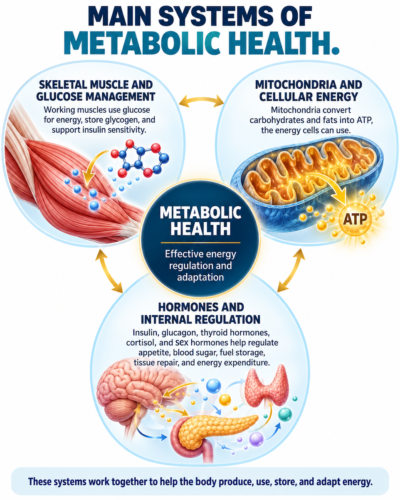
Skeletal Muscle and Glucose Management
Skeletal muscle is a major site for glucose disposal and a central participant in insulin action. When insulin sensitivity is healthy, muscle, fat, and liver cells respond appropriately to insulin. This allows glucose to move out of the bloodstream and into cells for immediate use or storage.
Physical activity can increase glucose uptake by working muscle, and regular exercise can improve the machinery involved in glucose transport and insulin action.
Building and preserving muscle also expands the tissue available to store glycogen and perform work. The more important benefits are improved strength, function, glucose regulation, resilience, and the preservation of lean mass across the lifespan.
Mitochondria and Cellular Energy
Mitochondria help convert fuel into adenosine triphosphate, or ATP, the form of energy cells can use. Varied forms of movement help the body meet both everyday and higher-intensity energy demands.
Endurance activity and other forms of repeated muscular work stimulate adaptations that can improve mitochondrial capacity. Strength training supports muscle tissue and can complement those aerobic adaptations.
Hormones and Internal Regulation
The hormonal system is complex and regulates multiple processes. Insulin, glucagon, thyroid hormones, cortisol, sex hormones, and other signaling molecules influence appetite, glucose control, fuel storage, tissue repair, and energy expenditure.
Persistent fatigue, unexplained weight change, excessive thirst or urination, irregular menstrual cycles, or unusual sensitivity to heat or cold may signal underlying metabolic or hormonal imbalances.
Seven Ways to Support Metabolic Efficiency
Build and Preserve Muscle
Build and preserve muscle by engaging in progressive resistance training to challenge major muscle groups. You can include movements such as squats, hinges, pushes, pulls, carries, and rotation work.
Progress can come from gradually increasing resistance, repetitions, range of motion, control, or exercise complexity. Keep in mind that consistency matters more than chasing exhaustion in every session.
Develop Aerobic Capacity
Moderate cardiovascular exercise improves the ability to sustain work, while appropriately programmed high-intensity interval training challenges rapid energy production. Walking, cycling, swimming, jogging, and other rhythmic activities can all contribute.
You should try to meet federal physical activity recommendations and engage in 150 to 300 minutes of moderate-intensity aerobic activity each week, or 75 to 150 minutes of vigorous activity, plus muscle-strengthening activity at least two days.
Increase Everyday Movement
A workout cannot fully replace movement throughout the rest of the day. Short walks, standing breaks, stairs, household work, and active transportation add to daily energy expenditure and repeatedly engage muscles.
A mobility or stretching session, or a brief walk after meals, can also be a practical way to interrupt sedentary time and support post-meal glucose management.
Eat to Supply Energy and Preserve Lean Tissue
Stay hydrated and have a metabolically supportive eating pattern that provides enough energy and nutrients needed for performance and repair. Emphasize minimally processed foods, adequate protein, healthy fats, organic fiber-rich carbohydrates, vegetables, and fruits. Protein supports tissue repair and lean mass, carbohydrates provide available energy, while fats supply essential fatty acids that support cell and hormone-related functions.
Avoid severe restriction for short-term weight loss, since chronic under-fueling can impair training quality, recovery, mood, sleep, reproductive function, and the preservation of muscle. Metabolic health is better served by an eating pattern that can be sustained and adjusted as needs change.
For practical guidance on choosing the right nutrients and timing them around exercise, explore our guide on what to eat before and after workouts, including meal-timing strategies that support energy, performance, recovery, lean tissue, and training demands.
Protect Sleep and Recovery
Aim for restorative sleep to support glucose regulation, appetite signaling, recovery, and decision-making. Most adults should create a regular sleep window and manage evening light and stimulation.
Repeated sleep loss can make healthy food choices and exercise consistency harder and may reduce insulin sensitivity.
Regulate Stress and Avoid Constant Overload
Acute stress helps the body mobilize energy for a challenge. However, persistent stress, inadequate recovery, and overtraining can disrupt sleep, appetite, blood pressure, and adherence to health behaviors.
Stress management techniques and realistic training cycles that include recovery days can reduce total strain.
Address Thought Patterns and Mindset
Metabolic efficiency and thinking patterns influence each other through the brain–body connection. Repeated thinking patterns can shape stress physiology, sleep, eating behavior, movement, and recovery—all of which affect metabolic health.
Cognitive distortions can keep the stress response activated, disrupting cortisol patterns that interfere with sleep, appetite regulation, blood-sugar control, recovery, and food choices. They can also lead to cycles of extreme restriction, overeating, overtraining, and inactivity, making healthy metabolic regulation harder to maintain.
Constructive thinking patterns and a growth mindset, on the other hand, can help develop greater self-awareness, cognitive flexibility, and realistic expectations, supporting the consistent behaviors the body needs for healthy energy regulation and long-term metabolic efficiency.
Common Myths About Metabolism
| Myth | What the evidence supports |
| A faster metabolism is always healthier | Health depends on regulation and context. A high metabolic rate can also occur with illness or physiological stress. |
| Sweating proves that a workout boosted metabolism | Sweating primarily cools the body. It does not measure fat loss, calorie expenditure, or metabolic health. |
| One food or supplement can reset metabolism | No single ingredient can replace training, daily movement, sleep, and adequate nutrition. |
| Carbohydrates prevent fat burning | The body uses both carbohydrate and fat. Fuel selection changes with intensity, feeding status, training, and health. |
| Eating very little is the fastest path to lasting results | Aggressive restriction can reduce training performance and lean mass and may trigger compensatory changes that make maintenance harder. |
How to Track Progress Without Chasing a Perfect Number
There is no consumer test that captures metabolic efficiency as one definitive score. Wearables and calorie estimators can identify trends, but their numbers are estimates. A better approach is to combine objective health information with performance and behavior.
- Strength, aerobic capacity, walking tolerance, and recovery between sessions
- Energy, hunger, sleep quality, and mood
- Waist circumference, body-composition trends, and how clothing fits
- Wellness tests, blood pressure readings, and markers such as fasting glucose, A1C, triglycerides, HDL cholesterol
- Consistency with movement, training, nutrition, sleep, and stress-management habits
You should not focus on one marker. Look for patterns across different areas over time, since single measurements fluctuate.
The FITNALL Method treats metabolic health as the product of interacting systems. Each pillar (Fitness, Internal Health, Thought Patterns and Mindset, Nutrition, Adaptation to Stress and Emotional Balance, Lifestyle and Longevity Habits) supports a different part of energy regulation and helps turn isolated health advice into a sustainable plan.
A Practical Starting Plan
Start with the smallest plan you can repeat and progress:
- Complete two or more full-body resistance-training sessions each week.
- Build toward the recommended weekly aerobic activity while matching intensity to your current fitness and health.
- Break up long periods of sitting and walk when practical, especially after meals.
- Include a quality protein source and fiber-rich plant foods in meals while eating enough to support your activity.
- Maintain a consistent sleep schedule and schedule regular recovery periods.
- Choose techniques to help you manage stress and thought patterns so you can stay calm.
Track a few meaningful outcomes for at least four to six weeks before making major changes.
The Bottom Line
Metabolic efficiency is the body’s ability to manage energy effectively and adapt to changing demands. It depends on healthy fuel use, insulin action, mitochondrial capacity, muscle, movement, nutrition, sleep, stress regulation, and internal health. It cannot be reduced to a metabolism-boosting trick or a single wearable score.
The FITNALL Method strengthens these systems together. By training the body, nourishing it adequately, supporting internal health, regulating stress, optimizing your mindset, and building sustainable routines, you create the conditions for optimal metabolic health – steadier energy, better performance, healthier body composition, and greater resilience over time.
To a Fitter Healthier You,
Mind-Body Optimization Specialist
About the Author
Adriana Albritton is a Mind-Body Optimization Specialist and founder of FitnAll Coaching. She developed the FITNALL Method, a holistic framework that integrates fitness, internal health, thought patterns, nutrition, adaptation, longevity, and lifestyle habits to support sustainable fat loss and long-term wellness. Adriana is the author of 28 Days to a New Life: A Holistic Program to Get Fit, Delay Aging, and Enhance Your Mindset. She speaks and writes about holistic performance, longevity, and the integration of mind and body for optimal health.
Sources
Goodpaster BH and Sparks LM. Metabolic Flexibility in Health and Disease. Cell Metabolism. 2017.
Cartee GD and colleagues. Exercise Promotes Healthy Aging of Skeletal Muscle. Cell Metabolism. 2016.
U.S. Department of Health and Human Services. Physical Activity Guidelines for Americans.
FitnAll | FITNALL Method