
One of the most common questions in fitness is, “How many rest days should I take?” The answer isn’t the same for everyone. Your ideal recovery schedule depends on several factors, including your age, training experience, workout intensity, overall health, sleep quality, nutrition, stress levels, and fitness goals. Some people benefit from complete rest, while others recover better with light movement. The key isn’t simply taking more days off; it’s giving your body enough time to repair, restore, and adapt before challenging it again. In this article, you’ll learn how recovery days work, when you need them, the difference between passive and active recovery, how to recognize the signs of inadequate recovery, the most common mistakes, and how to determine the right balance for your body.
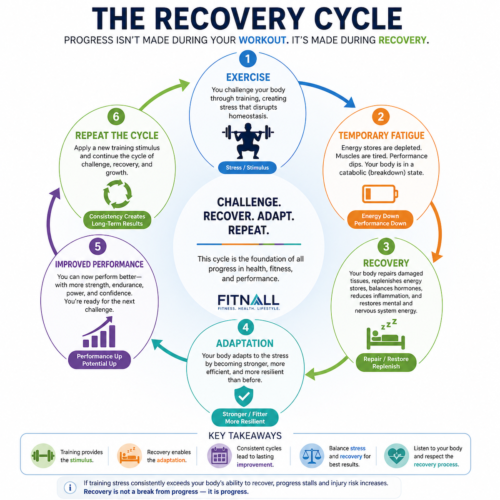
Recovery is an essential biological process that helps your body repair damaged tissues, restore energy, regulate physiological functions, and adapt to stress. Your body follows a predictable pattern every time it’s challenged.
Exercise provides the stimulus, recovery allows your body to repair and restore itself, and adaptation makes you stronger, fitter, and more resilient. Repeating this cycle consistently is the foundation of long-term progress in health, fitness, and performance.
What Is a Recovery Day?
Recovery days allow your body to repair, restore, and adapt after exercise. During this time, your muscles rebuild, energy stores are replenished, your nervous system recovers, and the physiological changes that improve your fitness begin to take place.
However, taking a rest day doesn’t always mean doing nothing. Depending on how you’re feeling and the intensity of your recent workouts, gentle movement may actually help you recover more effectively than complete inactivity.
Recovery days are an essential part of a well-designed fitness program, giving your body time to repair and adapt while incorporating recovery strategies to support the recovery process.
Active Recovery vs Passive Recovery
Passive Recovery
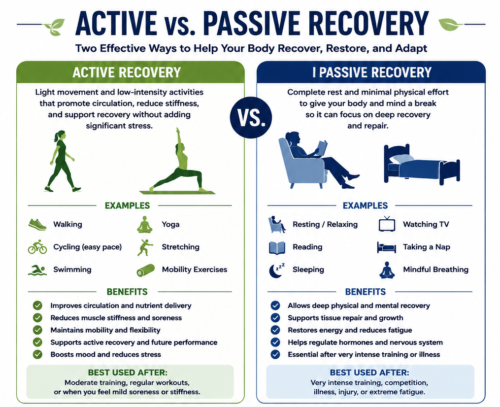
Passive recovery means giving your body a chance to recover through complete rest or minimal physical activity. If you’ve completed a particularly intense workout, are feeling extremely fatigued, recovering from an illness or injury, or simply need a mental break, taking a day to slow down may be exactly what your body needs.
- Prioritizing quality sleep, proper hydration, nutritious meals, and relaxation can help maximize the benefits of a passive recovery day
- Examples of passive recovery include relaxing, reading, sleeping, or watching TV
During passive recovery, your body continues repairing tissues, restoring energy stores, regulating hormones, and supporting immune function—all without the added demands of exercise.
Active Recovery
Active recovery involves engaging in light, low-intensity movement that helps your body repair without creating significant additional stress. Rather than pushing yourself through another challenging workout, you focus on activities that promote circulation, reduce stiffness, maintain mobility, and support the body’s natural repair processes.
- Walking, yoga, swimming, mobility exercises, cycling, and stretching are all excellent options
The key is to keep the intensity low; you should finish feeling refreshed, not exhausted. Active recovery helps your body revert while maintaining movement quality and preparing for your next training session.
How Many Recovery Days Do You Need?
Recovery is personal. There isn’t a universal answer to how many recovery days you need because every body responds differently to physical stress. Your ideal recovery schedule depends on several factors, including how often you exercise, the intensity and duration of your workouts, your fitness level, your age, and your overall health.
Recovery is also influenced by lifestyle factors such as sleep quality, nutrition, hydration, and stress. Two people can complete the exact same workout yet require different amounts of recovery based on these individual factors. Your recovery schedule should fit your body, not someone else’s.
Instead of following a rigid rule, pay attention to how your body responds. If you’re consistently feeling energized, performing well, sleeping soundly, and recovering between workouts, your current routine is likely meeting your needs.
On the other hand, if you’re experiencing persistent physical issues, declining performance, or poor sleep, your body may be telling you it needs time to reset.
The goal isn’t to take as many recovery days as possible but to rest enough to allow your body to repair, adapt, and continue making progress.
Recovery for Different Goals
Your ideal recovery schedule depends on your specific situation. Here’s how recovery may vary based on what you’re trying to achieve.
Muscle Growth
If your goal is to build muscle, you need to give your muscles enough time to repair and grow before training them again. In general, most muscle groups benefit from 48 to 72 hours of recovery after a challenging strength-training session.
That doesn’t mean you have to stop exercising. You can continue training by working different muscle groups on alternate days while allowing the others to recover.
Fat Loss
If your goal is weight loss, staying active most days of the week can help increase energy expenditure and support long-term consistency. However, more exercise isn’t always better.
Recovery days help prevent excessive fatigue, reduce the risk of burnout, and allow you to maintain the energy and motivation needed to stick with your program. Passive recovery can keep you moving without overloading your body.
Athletic Performance
If you’re training for a sport or competition, recovery should be viewed as part of your training, not a break from it. This helps improve performance, lowers injury risk, and prepares you for your next hard training session
High-performance athletes often plan recovery just as carefully as their workouts by incorporating lighter training days, active recovery sessions, and scheduled deloading to reduce accumulated fatigue.
Healthy Aging
As you get older, your body generally needs more time to recover from intense physical activity. Recovery becomes increasingly important because muscles, connective tissues, and joints may take longer to repair.
Prioritizing mobility exercises, flexibility training, strength training, quality sleep, and proper nutrition can help you stay active, reduce injury risk, and maintain your independence and quality of life for years to come.
General Health
If your goal is simply to improve your overall health, regular movement is one of the best things you can do for your body. Most adults can benefit from being physically active on most days of the week by varying workout intensity and incorporating a balanced routine that includes strength training, cardiovascular exercise, mobility work, and active recovery.
Sample Weekly Schedules
There isn’t a single recovery schedule that works for everyone. The examples below illustrate how you might balance exercise and recovery based on your fitness level. Pay attention to how you feel and adjust your schedule accordingly.
Beginner
If you’re new to exercise, your body needs time to adapt to the physical demands of training. A schedule of three workout days, two recovery days, and two days of light activity is a good starting point. This approach gives your muscles, joints, and nervous system time to recover while helping you build consistency and reduce your risk of injury.
Example:
- Monday: Strength training
- Tuesday: Walking
- Wednesday: Strength training
- Thursday: Recovery day
- Friday: Strength training
- Saturday: Swimming or cycling
- Sunday: Recovery day
Intermediate
As your fitness improves, your body becomes better at recovering from exercise. You can do well with four to five workouts per week, balanced with one or two active recovery days.
Example:
- Monday: Strength training
- Tuesday: Cardio
- Wednesday: Active recovery (walking or yoga)
- Thursday: Strength training
- Friday: Cardio or strength training
- Saturday: Active recovery
- Sunday: Passive recovery or light mobility
Advanced
If you’re an experienced exerciser or competitive athlete, recovery should be built into your training program just as intentionally as your workouts. Rather than training at maximum intensity every day, use periodization, alternate harder and easier training sessions throughout the week, and incorporate planned deload and rest days every few weeks to reduce accumulated fatigue.
Common Recovery Day Mistakes
If your goal is to help your body repair, restore, and adapt, try to avoid these common mistakes:
- Thinking recovery means you’re being lazy. Taking a planned recovery day isn’t a sign that you’re losing progress; it’s an essential part of making progress.
- Trying to “make up” missed workouts. If you miss a workout, resist the urge to double up the next day or squeeze in extra sessions. Consistency over time is far more effective than trying to compensate with excessive exercise.
- Turning recovery days into another hard workout. Recovery days aren’t the time for HIIT sessions, heavy lifting, or pushing yourself to exhaustion. If you choose to be active, keep the intensity low.
- Ignoring your sleep. A recovery day isn’t just about exercising less. It’s also an opportunity to prioritize quality sleep. Your body performs much of its repair and restoration during this time, making sleep hygiene one of the most important recovery tools you have.
- Neglecting your nutrition because you’re not exercising. Your body continues repairing tissues and replenishing energy stores even on rest days. Continue eating balanced organic meals, consuming adequate protein, and staying hydrated to support these processes.
- Feeling guilty about taking time to recover. Many people believe they need to earn a day off, but recovery is part of training, not a reward for it.
- Training when you experience symptoms: If you’re feeling unusually sore or fatigued, your legs feel heavy, your workouts seem harder than usual, you’re sleeping poorly, your motivation has dropped, or you’ve noticed an elevated resting heart rate, it may be a sign that your body would benefit from an extra recovery day. If these symptoms persist for several days or continue despite prioritizing recovery, they may indicate you have overtraining syndrome.
Conclusion
Recovery days are not a sign of weakness or lost progress; they’re one of the reasons progress happens and an essential part of becoming stronger, healthier, and more resilient. They allow your muscles to repair, your energy stores to be replenished, your nervous system to reset, and the adaptations that improve fitness and performance to take place.
Listen to your body. Your ideal recovery schedule depends on your goals, training intensity, fitness level, age, nutrition, sleep quality, stress levels, and overall health. Some days your body may benefit from complete rest, while other days active recovery may be the best choice.
Remember that recovery extends far beyond taking a day off from exercise. Quality sleep, proper hydration, balanced nutrition, stress management, and healthy lifestyle habits all work together to support your body’s ability to repair, restore, adapt, and prepare for future challenges.
The goal isn’t to train as hard as possible but to train smart. The FITNALL app helps you balance periods of challenge with intentional recovery to improve performance, reduce your risk of injury and burnout, and build a healthier, more sustainable approach to fitness and well-being.
Frequently Asked Questions
Yes—provided you vary the intensity, duration, and type of exercise. Your body can tolerate daily movement much better than daily high-intensity training. Activities such as walking, stretching, yoga, mobility exercises, and easy cycling can often be performed every day because they place relatively little stress on the body. However, performing heavy strength training, HIIT, or long endurance workouts require rest days.
There is no one-size-fits-all answer. The number of recovery days you need depends on several factors, including your age, goals, fitness level, training experience, workout intensity, sleep quality, nutrition, stress levels, and overall health. Some people benefit from active recovery while others need complete rest. Rather than following a rigid schedule, pay attention to how your body responds and adjust your training when needed.
Rest days don’t have to mean couch days. In many cases, light movement helps promote circulation, reduce stiffness, and maintain mobility without placing additional stress on your body. Yet, its important to prioritize quality sleep, hydration, and nutritious meals to support your body’s natural repair processes.
Your body often provides clear signals when it needs additional recovery. Consider taking an extra recovery day if you notice persistent or unusual muscle soreness, declining workout performance, heavy or fatigued legs, poor sleep, low motivation, increased irritability or mood changes, elevated resting heart rate, or feeling mentally or physically exhausted.
Occasional extra recovery days are not harmful and may even improve long-term consistency. However, regularly avoiding physical activity can reduce momentum, cardiovascular fitness, muscle strength, and mobility over time. The goal is to find the right balance between training and recovery.
Yes. As you age, muscle protein synthesis slows, connective tissues often require more time to heal, and recovery from intense exercise may take longer. Plus, sleep quality and hormonal imbalances can influence how quickly your body repairs itself.
That doesn’t mean you should stop exercising. In fact, regular physical activity becomes even more important for maintaining muscle mass, bone health, balance, and independence. It simply means that recovery strategies become increasingly valuable.
Feeling tired after a challenging workout is a normal part of the recovery process and usually improves within a day or two. Overtraining is different. It occurs when training stress consistently exceeds your body’s ability to recover, leading to persistent fatigue, declining performance, prolonged soreness, sleep disturbances, mood changes, and an increased risk of illness or injury.
To a Fiiter Healthier You,
Adriana Albritton
Mind-Body Optimization Specialist
About the Author
Adriana Albritton is a Mind-Body Optimization Specialist and founder of FitnAll Coaching. She developed the FITNALL Method, a holistic framework that integrates fitness, internal health, thought patterns, nutrition, adaptation, longevity, and lifestyle habits to support sustainable fat loss and long-term wellness. Adriana is the author of 28 Days to a New Life: A Holistic Program to Get Fit, Delay Aging, and Enhance Your Mindset. She speaks and writes about holistic performance, longevity, and the integration of mind and body for optimal health.