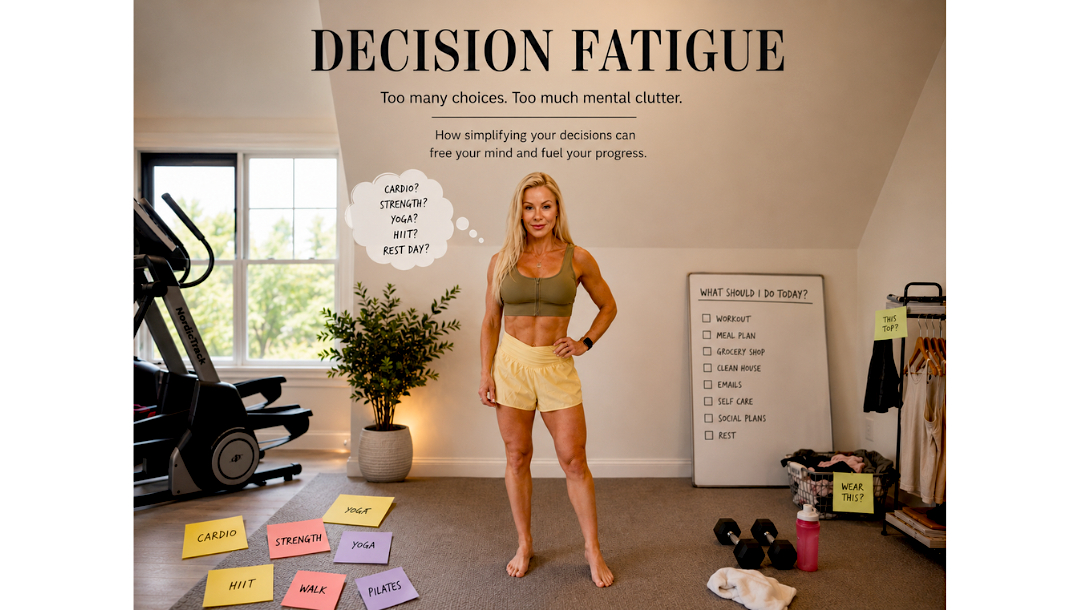
If you’ve ever lost weight only to gain it back, you’re not alone. While many people can follow a diet or exercise program for a few weeks, maintaining those healthy habits over the long term is where the real challenge begins. That’s why sustainable weight loss isn’t about finding the perfect diet or workout; it’s about creating a lifestyle you can maintain for years. One of the most overlooked barriers to long-term weight loss is something psychologists call decision fatigue. In this article, you’ll learn what decision fatigue is, why it can derail your weight loss efforts, and practical strategies to make healthy eating, regular exercise, and sustainable weight loss feel less like a daily battle and more like a natural part of your life.
Losing Weight Isn’t the Hard Part—Keeping It Off Is
Millions of people successfully lose weight every year. Yet many regain some or all of it within a few years. Many people believe they fail because they lack willpower or motivation. But what if that’s not the real problem? In reality, they may simply be mentally exhausted. While hormones, medical conditions, and lifestyle all play important roles, one often-overlooked reason for this pattern is decision fatigue.
Every day, you make thousands of decisions, from responding to emails and managing work to caring for family, paying bills, and planning meals. By the time you decide what to eat for dinner, whether to exercise, or whether to resist that late-night snack, your brain may already be mentally exhausted. The result? Healthy choices begin to feel harder, convenience becomes more appealing, and the habits that support lasting weight loss gradually give way to the easiest option.
Understanding how decision fatigue affects your daily choices can help explain why so many weight loss plans fail and, more importantly, how to build a healthier lifestyle that’s easier to maintain.
What Is Decision Fatigue?
Throughout the day, you make countless decisions, many of which directly affect your health. You might ask yourself:
- What should I eat for breakfast?
- Should I stop for coffee?
- What should I make for dinner?
- Should I work out today?
- Which workout should I do?
- Should I go grocery shopping tonight?
- Should I have a snack while watching television?
Each decision may seem small on its own, but together they create a significant mental workload. By the end of the day, your brain is more likely to choose what’s easiest or most convenient rather than what’s healthiest. This isn’t lack of character. It’s a predictable response to cognitive overload.
Decision fatigue is the mental exhaustion that develops after making many decisions throughout the day. Think of your brain like a smartphone battery. Every choice, large or small, uses a little of that energy. While no single choice is exhausting, hundreds of decisions gradually drain your mental resources. While no single choice is exhausting, hundreds of decisions gradually drain your mental resources and decision-making energy.
How Decision Fatigue Affects Weight Loss
Successful weight loss depends on consistently making healthy choices over weeks, months, and years—not just for a few days.
Unfortunately, those healthy choices require repeated decision-making, such as planning meals, grocery shopping, reading nutrition labels, resisting cravings, scheduling workouts, preparing healthy foods, prioritizing sleep, and managing stress.
As mental fatigue builds, your brain naturally gravitates toward the easiest and most familiar option. That may mean ordering takeout, skipping workouts, choosing convenience foods, emotional eating, staying up late, and/or telling yourself you’ll “start again on Monday.”
This isn’t personal failure. It’s decision fatigue.
Why Willpower Isn’t Enough
Many weight-loss programs emphasize discipline, self control, and willpower. But these fluctuate from day to day. Stress, poor sleep, illness, emotional challenges, and busy schedules all reduce your ability to make difficult decisions.
While self-control plays an important role, research suggests that our environment, routines, and the number of decisions we face each day strongly influence our behavior. People who appear highly disciplined often rely on systems and habits that reduce the need to the number of decisions they need to make.
For example, they may meal prep every Sunday, schedule workouts in advance, keep healthy foods readily available, remove tempting snacks from their home, and/or follow a structured fitness and nutrition plan.
The goal isn’t to become more disciplined. It’s to make healthy choices easier.
Signs You’re Experiencing Decision Fatigue
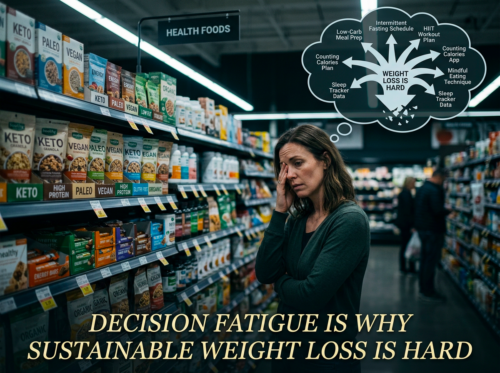
You may be experiencing decision fatigue if you frequently:
- Feel overwhelmed deciding what to eat
- Skip workouts because you can’t decide what exercise to do
- Eat healthy during the day but overeat at night
- Continuously restart diets on Mondays
- Feel mentally exhausted by evening
- Know what you should do but struggle to follow through
If this sounds familiar, you’re not alone.
Other Factors That Make Sustainable Weight Loss Difficult
Decision fatigue is only one piece of the puzzle.
Long-term success also depends on addressing the following:
- Chronic Stress: Stress can increase cravings, reduce sleep quality, impair recovery, and make healthy decisions more difficult.
- Unrealistic Diets: Highly restrictive diets often require constant self-control and are difficult to maintain over time.
- Information Overload: Should you try keto? Mediterranean? Intermittent fasting? High protein? Low carb? Too many options can lead to analysis paralysis.
- Lack of Personalization: A plan that works for one person may not fit another person’s schedule, preferences, medical history, or goals.
- All-or-Nothing Thinking: Many people abandon their entire plan after one missed workout or one unhealthy meal.
Lasting success comes from consistency, not perfection.
How to Reduce Decision Fatigue and Achieve Sustainable Weight Loss
Fortunately, decision fatigue isn’t permanent and can be reduced. The goal is to make healthy decisions easier.
1. Plan Your Meals Ahead of Time
Instead of asking yourself what to eat three or four times every day, create a weekly meal plan. Knowing in advance what you’ll eat for breakfast, lunch, dinner, and snacks eliminates dozens of daily food-related decisions.
Meal planning reduces stress, saves time, and makes nutritious eating much more consistent. It can also help reduce impulsive food choices, emotional eating, and the temptation to rely on fast food or highly processed convenience meals when you’re tired or short on time. By making fewer decisions throughout the day, you’ll conserve mental energy and make it easier to stay on track with your weight loss goals.
2. Schedule Your Workouts
Treat exercise like any other important appointment.
Rather than deciding every afternoon whether you feel like exercising, schedule your workouts in advance and know exactly what you’ll be doing. Whether it’s strength training on Monday, Wednesday, and Friday or a walk after dinner each evening, having a predetermined plan eliminates unnecessary decision-making.
When your workout is already on your calendar and your routine is established, you’re less likely to debate whether to exercise or waste time deciding what to do. Instead, you can simply follow the plan, making consistency easier and reducing the mental effort required to stay active.
3. Simplify Your Nutrition
Healthy eating doesn’t have to be complicated.
Choose a handful of nutritious breakfasts, lunches, dinners, and snacks that you genuinely enjoy and rotate them throughout the week. Having a go-to list of healthy meals eliminates the need to constantly decide what to eat, reducing decision fatigue and making it easier to stay on track.
You don’t need to try every new diet or recipe you see online. A simple, balanced eating pattern that includes lean proteins, fruits, vegetables, whole grains, healthy fats, and other nutrient-dense foods is often easier to maintain than a highly restrictive plan. Consistency is far more important than constantly searching for the “perfect” diet. Sustainable weight loss is built on habits you can realistically maintain for the long term.
4. Sustainable Weight Loss is Built on Habits
When you build healthy habits, you eliminate dozens of daily decisions. This reduces mental fatigue and makes healthy behaviors feel more automatic. Instead of deciding what to do each day, you simply follow a routine you’ve already established. Over time, these repeated behaviors become habits that require less conscious effort.
For example:
Morning routine:
- Drink water
- Stretch for five minutes
- Eat a protein-rich breakfast
- Review your day’s priorities
Evening routine:
- Prepare tomorrow’s lunch
- Lay out your workout clothes
- Limit screen time before bed
- Go to sleep at a consistent time
The more your healthy behaviors become part of your daily routine, the less you have to rely on willpower or motivation. By reducing the number of decisions you make each day, you conserve mental energy and make it easier to stay consistent with your weight loss and overall health goals.
5. Improve Your Environment
Your surroundings influence your decisions more than most people realize. In fact, the easier you make healthy choices, the less mental energy you’ll need to make them. A supportive environment reduces decision fatigue by removing obstacles and making healthy behaviors the default rather than something you have to think about or debate each day.
Try to:
- Keep water and healthy foods visible.
- Store less nutritious snacks out of sight.
- Keep workout equipment easily accessible.
- Pack your gym bag the night before.
- Prepare healthy meals in advance.
Small environmental changes can significantly reduce friction and make healthy choices feel more automatic. Instead of relying on willpower every time you’re faced with a decision, your environment gently nudges you toward healthier behaviors. Over time, these small changes can lead to greater consistency, making sustainable weight loss and long-term healthy habits much easier to maintain.
6. Manage Stress
Chronic stress accelerates mental fatigue, making it more difficult to make thoughtful decisions and maintain healthy habits. When you’re overwhelmed, your brain naturally seeks the quickest and easiest solutions, which often means reaching for convenience foods, skipping workouts, or abandoning healthy routines.
Simple strategies like walking outdoors, deep breathing, meditation, adequate sleep, resistance training, and regular physical activity can help reduce stress and improve your ability to make better decisions throughout the day. Over time, these practices not only support your mental well-being but also strengthen your resilience, making it easier to stay consistent with your nutrition, exercise, and other healthy lifestyle habits.
Managing stress isn’t just good for your mental health; it also makes sustainable weight loss and long-term behavior change more achievable.
7. Challenge All-or-Nothing Thinking
One of the biggest obstacles to sustainable weight loss is the belief that one mistake ruins your progress. If you skip a workout or eat an unhealthy meal, it’s easy to think, “I’ve already messed up, so I might as well start over on Monday.” This type of thinking is known as all-or-nothing thinking, a common cognitive distortion that views situations in extremes rather than recognizing the middle ground.
Instead of striving for perfection, focus on consistency. A single missed workout or indulgent meal doesn’t erase weeks of healthy choices, just as one healthy meal won’t transform your health overnight. Lasting results come from what you do most of the time, not from being perfect every day.
When you catch yourself thinking in absolutes like “I failed,” “I blew my diet,” or “There’s no point continuing,” pause and reframe the thought. Replace it with something more realistic, such as “One choice doesn’t define my progress. My next healthy decision is what matters most.” By challenging all-or-nothing thinking and other cognitive distortions, you’ll be more resilient, recover from setbacks more quickly, and stay consistent with your healthy habits over the long term.
Why Personalized Guidance Makes Weight Loss More Sustainable
If you’re trying to lose weight, you’ve probably found yourself making dozens of health-related decisions every day. As you now know, while each decision may seem small, they quickly add up, increasing mental fatigue and making it harder to stay consistent.
That’s why having a structured, personalized plan can make such a difference. Instead of constantly wondering what to do next, you simply follow a clear roadmap that’s tailored to your goals, preferences, schedule, and lifestyle. This reduces the mental burden of making so many decisions and allows you to focus your energy on taking action rather than figuring out the next step.
Technology can make this process even easier. Personalized digital coaching platforms can organize your workouts, nutrition, mindset practices, stress-management techniques, and healthy habits into a simple daily plan. By reducing decision fatigue and providing consistent guidance, these tools can help you stay on track and make sustainable weight loss feel more manageable.
Build Healthy Habits Without the Mental Overload
If you’re tired of starting over, you don’t need another restrictive diet or more information; you need a system that makes healthy choices easier. Sustainable weight loss happens when you reduce the daily mental effort required to eat well, stay active, manage stress, and maintain healthy habits.
That’s exactly what my app, FITNALL: The Mind-Body Recode System, is designed to do.
Instead of wondering what to eat, how to exercise, or which healthy habit to focus on next, you’ll receive personalized guidance for fitness, nutrition, mindset, stress management, and overall wellness—all organized into a simple daily plan. By reducing decision fatigue and providing clear direction, the mind-body recode system helps you spend less time thinking about what to do and more time taking consistent action.
Whether your goal is to lose weight, improve your health, change sabotaging thinking patterns, build healthier habits, or create a lifestyle you can actually maintain, FITNALL gives you the tools, structure, and daily support to help you achieve lasting results.
Ready to make your fitness journey and healthy living simpler? Explore this transformational AI-Powered FITNALL app that provides a holistic approach and personalized daily coaching to help you build habits that support long-term health and sustainable weight loss.
Final Thoughts
Sustainable weight loss isn’t about finding the perfect diet or relying on endless willpower or motivation. It’s about creating a lifestyle where healthy choices become easier to make, even when life gets busy.
By understanding decision fatigue, simplifying your routines, planning ahead, and reducing unnecessary choices, you can build habits that support long-term success.
At FITNALL, we’ve embraced this philosophy by creating a platform that provides personalized guidance for fitness, nutrition, mindset, stress management, and healthy living. Rather than asking you to make dozens of health-related decisions every day, the mind-body recode system helps organize those choices into a practical, sustainable plan, making it easier to stay consistent and achieve lasting results.
Frequently Asked Questions
Decision fatigue is the mental exhaustion that occurs after making numerous decisions throughout the day. It can reduce your ability to make thoughtful choices, especially later in the day.
Yes. Decision fatigue can contribute to skipped workouts, unhealthy food choices, emotional eating, and inconsistent routines, making sustainable weight loss more difficult.
Yes. When mental energy is low, people are more likely to choose convenient, highly processed foods instead of preparing nutritious meals.
Absolutely. After a long day of making decisions, deciding whether to exercise—and what workout to do—can feel overwhelming, leading many people to skip planned workouts.
Meal planning, scheduling workouts, creating routines, simplifying daily choices, improving your environment, managing stress, and following a structured plan can all help reduce decision fatigue.
Yes. Digital tools that organize workouts, nutrition, habit tracking, and daily priorities can reduce the number of health-related decisions you need to make, making consistency easier to maintain.
Many diets fail because they rely heavily on willpower, are overly restrictive, and don’t account for stress, decision fatigue, or long-term behavior change.
Meal planning, simplifying your food choices, preparing healthy meals in advance, improving your environment, and following a structured plan can reduce decision fatigue and support lasting healthy habits.
Motivation can help you get started, but sustainable weight loss is more likely when healthy behaviors become part of a consistent routine supported by systems that reduce the number of daily decisions you need to make.
To a Fitter Healthier You,
Mind-Body Optimization Specialist
About the Author
Adriana Albritton is a Mind-Body Optimization Specialist and founder of FitnAll Coaching. She developed the FITNALL Method, a holistic framework that integrates fitness, internal health, thought patterns, nutrition, adaptation, longevity, and lifestyle habits to support sustainable fat loss and long-term wellness. Adriana is the author of 28 Days to a New Life: A Holistic Program to Get Fit, Delay Aging, and Enhance Your Mindset. She speaks and writes about holistic performance, longevity, and the integration of mind and body for optimal health.