
Exercise supports healthy aging by helping older adults maintain strength and balance and reduce falls. A Cochrane review found that exercise reduced the rate of falls by 23% among older adults living in the community. Cohort studies link higher activity levels with lower mortality. In the five-year Generation 100 trial, mortality did not differ significantly when the two supervised exercise groups were pooled and compared with the group advised to follow national physical activity guidelines.
In Trondheim, Norway, 1,567 people between 70 and 77 were randomly sorted into three groups and followed for five years. One group did supervised interval training twice a week, hard enough to reach about 90% of peak heart rate. One did moderate continuous training. The third simply followed the national physical activity guidelines. The question was blunt: does supervised exercise change how many older people die? (Stensvold et al., 2020)
The Generation 100 trial, published in the BMJ in 2020, found no statistically significant difference in all-cause mortality between the pooled supervised exercise groups and the guideline group. In the individual groups, 3.0% of interval-training participants died over five years, compared with 4.7% in the guideline group. The hazard ratio was 0.63 (95% confidence interval 0.33 to 1.20). For moderate continuous training, the hazard ratio was 1.24 (95% confidence interval 0.73 to 2.10).
At baseline, 80% of participants reported medium or high physical activity. Many in the guideline group also chose to do vigorous exercise. That overlap made it harder to detect an added benefit from assignment to a supervised exercise program.
We wanted to know how typical that is, because most of what is written about healthy aging arrives as a confident headline. So we asked four things. Which findings come from strong study designs? How did longevity coverage move against the research? Where do fitness popularity and evidence disagree? And which countries lead on research and on search?
What Does Healthy Aging Research Actually Measure?

Start with the raw material. In the US National Library of Medicine’s PubMed database, 66,937 papers from 2015 to 2025 mention exercise or physical activity together with older adults, aging or similar terms. We sorted each one by the study design its record carries.
We counted randomized controlled trials, systematic reviews, and meta-analyses. Randomized trials assign interventions by chance. Systematic reviews use a defined process to find and assess relevant studies, and meta-analyses statistically combine results where appropriate. Together, these categories made up 13.9% of records (9,323). Randomized trials accounted for 8.3% and reviews or meta-analyses for 5.6%. Labeled observational studies accounted for 19.3%. Another 49.0% had no design label in this analysis.
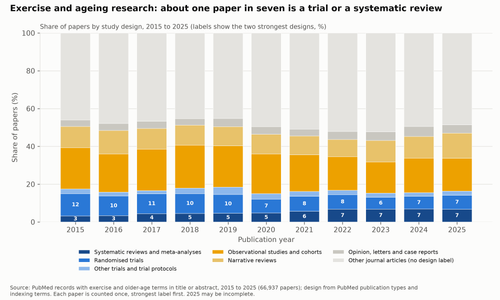
Chart 1: Share of exercise and ageing papers by study design, 2015 to 2025. Source: PubMed records, 66,937 papers.
The mix is changing, and not in the way you might expect. Systematic reviews and meta-analyses doubled their share, from 3.1% of papers in 2015 to 6.7% in 2025. Single randomized trials went the other way, from 11.9% to 7.5%.
The picture sharpens when we look only at the best-known papers. Fliar Prism’s pre-extracted research layer holds findings from papers cited at least 10 times. From it, we took 4,086 papers published from 2017 to 2025 that put exercise or activity and aging in the title, after removing duplicates, animal studies, and off-topic hits. Of these, 12.8% are systematic reviews or meta-analyses, 10.5% are randomized trials, and 39.8% are observational studies.
Study designs varied by the outcome researchers measured.
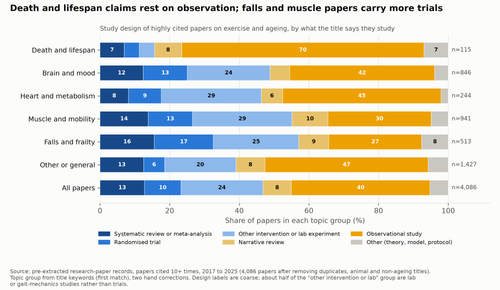
Chart 2: Study design of highly cited papers, by topic group. Source: pre-extracted research-paper records, papers cited 10+ times.
Papers about death and lifespan are the most observational: 69.6% of 115 papers, with 5 randomized trials. Papers about falls and frailty are the most experimental, with 17.0% randomized trials and 15.6% systematic reviews among 513. Muscle and mobility papers sit in between, with 12.8% trials and 13.8% reviews among 941. In plain terms, the strongest designs are concentrated where the outcome can be measured in months, such as strength, balance, and falls. The weakest are concentrated where the outcome takes decades, which is exactly the longevity claim.
Can Exercise Reduce Falls and Improve Physical Function?
Falls give the cleanest example. A Cochrane review of exercise for preventing falls in older people living in the community included 108 randomized trials with 23,407 participants. In the 59 trials (12,981 participants) that compared exercise with a control and counted falls, exercise cut the rate of falls by 23% (rate ratio 0.77, 95% confidence interval 0.71 to 0.83), and the review graded that evidence as high certainty (Sherrington et al., 2019).
To see whether this was an outlier, we hand-read the 24 most-cited human exercise trials in the literature that studied older adults. We left out trials of supplements and drugs alone, animal work, non-randomized studies, trials in middle-aged adults, and trials with no clear main result. Sixteen found a benefit on their main measure. Five were mixed. Three found no effect.
The benefits were practical. A trial in obese older adults found that aerobic, resistance or combined exercise all improved physical performance (Villareal et al., 2017). Tai Ji Quan lowered falls more than a multimodal exercise program (Li et al., 2018). A home-based program for older people who had already fallen cut the fall rate from 2.1 to 1.4 per person-year (Liu-Ambrose et al., 2019).
How to Exercise for Healthy Aging
A practical starting point is to combine aerobic activity, strength training, and balance work. Walking is one way to build aerobic activity into your day. Strength exercises can help with everyday tasks such as getting up from a chair or carrying groceries, and balance exercises target skills that help you stay steady. Choose activities that fit your current ability and build gradually (Izquierdo et al., 2025).
Read our guide to functional strength training for examples of exercises that carry over to daily life.
What Did Trials Find About Exercise and Cognition?
The null results matter just as much. A JAMA trial of mindfulness training and exercise in older adults found no significant effect of either on memory or executive function at six months (Lenze et al., 2022). Another, in people with dementia, found that high-intensity exercise raised walking speed by about 0.05 meters per second but did not change cognition (Sanders et al., 2020). The Trondheim trial is the third no-effect result in our set.
The 16 favorable results came from a small sample selected by citation count. In this sample, benefits were clearer for function, balance, and falls. Findings for cognition and mortality were less conclusive.
Does Exercise Help You Live Longer?
The longevity case rests mostly on cohort studies. These follow large groups and ask whether the more active die less. The ones we read agree.
In a study of older men, each extra 10 minutes of moderate or vigorous activity a day went with a hazard ratio of 0.90 for dying (confidence interval 0.84 to 0.96), and each extra 30 minutes of sitting went with 1.17 (Jefferis et al., 2019). Among 6,382 women aged 63 to 99 who wore movement sensors, the most active third had a relative risk of 0.42 against the least active third (LaMonte et al., 2018). In a study of 272,550 people with a mean age of 70.5, running at 7.5 to under 15 MET-hours a week (a standard unit of activity) went with a hazard ratio of 0.85, and walking for exercise went with 0.91 (Watts et al., 2022). Rising activity from midlife to old age was associated with a hazard ratio of 0.76 (Aggio et al., 2020).
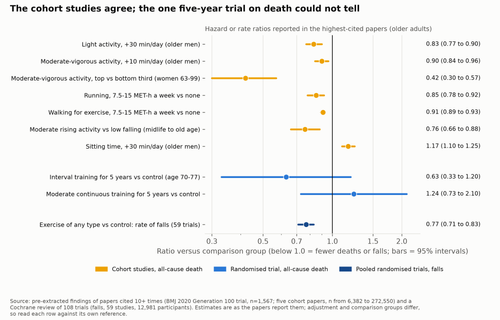
Chart 3: Effects reported for all-cause death and falls. Source: pre-extracted findings of papers cited 10+ times and a Cochrane review.
The direction is the same in every cohort row. Cohorts cannot show that the cause runs from exercise to survival, though, because the people who can run are often the people who were healthier to begin with. A trial is meant to close that gap, and the one five-year trial we found on death could not. The cohorts agree on direction, the falls trials confirm a real effect on one outcome, and for lifespan itself the strongest design has not yet delivered a clear answer.
How Has Longevity Coverage Changed?
Next we asked how coverage moved against the research. We counted news and blog articles whose opening text mentions longevity, healthspan, healthy aging, biological age or similar phrases together with a health word. We hand-read 40 articles from each of our two 12-month windows. In each, 32 were on topic, so about 4 in 5.
Indexed to 2017, papers on longevity, healthspan and healthy aging tripled by 2025 (+205%, from 3,193 to 9,737). Coverage per 100,000 articles doubled (7.1 to 14.5, +104%). But the timing differs. Between 2017 and 2022, papers grew 71% while coverage per 100,000 articles grew 11%. Between 2022 and 2025 the two moved together: papers +79%, coverage +83%.
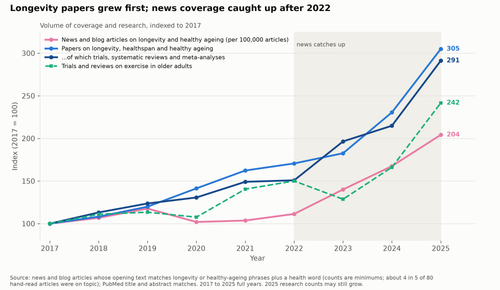
Chart 4: Longevity papers and news coverage, indexed to 2017. Source: news and blog articles and PubMed records.
Trials, systematic reviews, and meta-analyses accounted for 3.6% of longevity papers in 2017 and 3.4% in 2025. The number of these studies grew as the field expanded, while their share stayed roughly steady. Study design counts describe the mix of publications. Assessing the quality of individual studies requires a closer review.
Inside the coverage, the frame is shifting. Between the two windows, the share of longevity articles that mention supplements rose from 10.4% to 12.7%. Testing and technology words, such as biological-age tests and wearables, rose from 29.9% to 32.7%. Diet fell from 16.9% to 14.5%. Words that point to a study fell from 39.8% to 36.4%. Exercise held roughly steady, at 11.3% and 12.5%.
The supplement industry itself points out a problem. A trade report in April 2026 quoted the nutrition research manager at one food company saying many ingredients promoted for cellular rejuvenation or lifespan extension are still supported mainly by preclinical research, meaning cell or animal studies (Nutrition Insight, 2026). Our counts agree. Among PubMed papers on longevity topics that also name compounds such as NMN, resveratrol, metformin, rapamycin, or spermidine, only 9 of 321 in 2025 (2.8%) were randomized trials or systematic reviews.
Which Topics Are Gaining Attention?
We also compared the automatic topic labels on the same articles in the two windows (3,829 and 4,479 articles). The five themes that gained share are set against the five that lost it in the next chart.
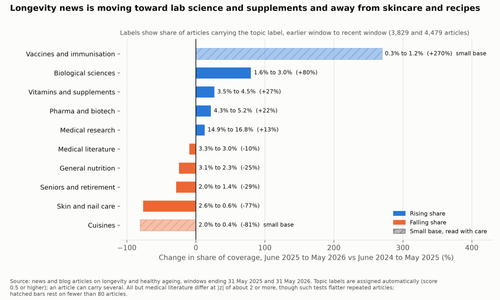
Chart 5: Rising and falling news themes in longevity coverage. Source: news and blog articles, June 2024 to May 2026.
Topics gaining coverage
- Biological sciences (lab and model-organism science presented as ageing research) went from 1.6% to 3.0% of articles (+80%).
- Vitamins and supplements went from 3.5% to 4.5% (+27%).
- Pharma and biotech went from 4.3% to 5.2% (+22%).
- Medical research (studies and trials reported as news) went from 14.9% to 16.8% (+13%).
- Vaccines and immunisation went from 0.3% to 1.2% (+270%), but this rests on 12 and 52 articles, so we do not read it as a lasting trend.
Topics losing coverage
- Skin and nail care (anti-ageing skincare copy) went from 2.6% to 0.6% (-77%).
- Seniors and retirement went from 2.0% to 1.4% (-29%).
- General nutrition went from 3.1% to 2.3% (-25%).
- Medical literature (journal abstracts and reference pages) went from 3.3% to 3.0% (-10%), which is not a clear change.
- Cuisines went from 2.0% to 0.4% (-81%), on small numbers, as recipe pages dropped out of the lane.
Coverage is moving away from beauty and recipes and toward lab science, biotech and supplements, where strong human trials are thinnest.
What Do People Search for About Healthy Aging?
We took 37 workout, diet, supplement, and aging phrases and measured their relative worldwide search interest over the 12 months to 30 June 2026, indexed so that “yoga” equals 100. The top 25 are in the chart. The values show relative interest.
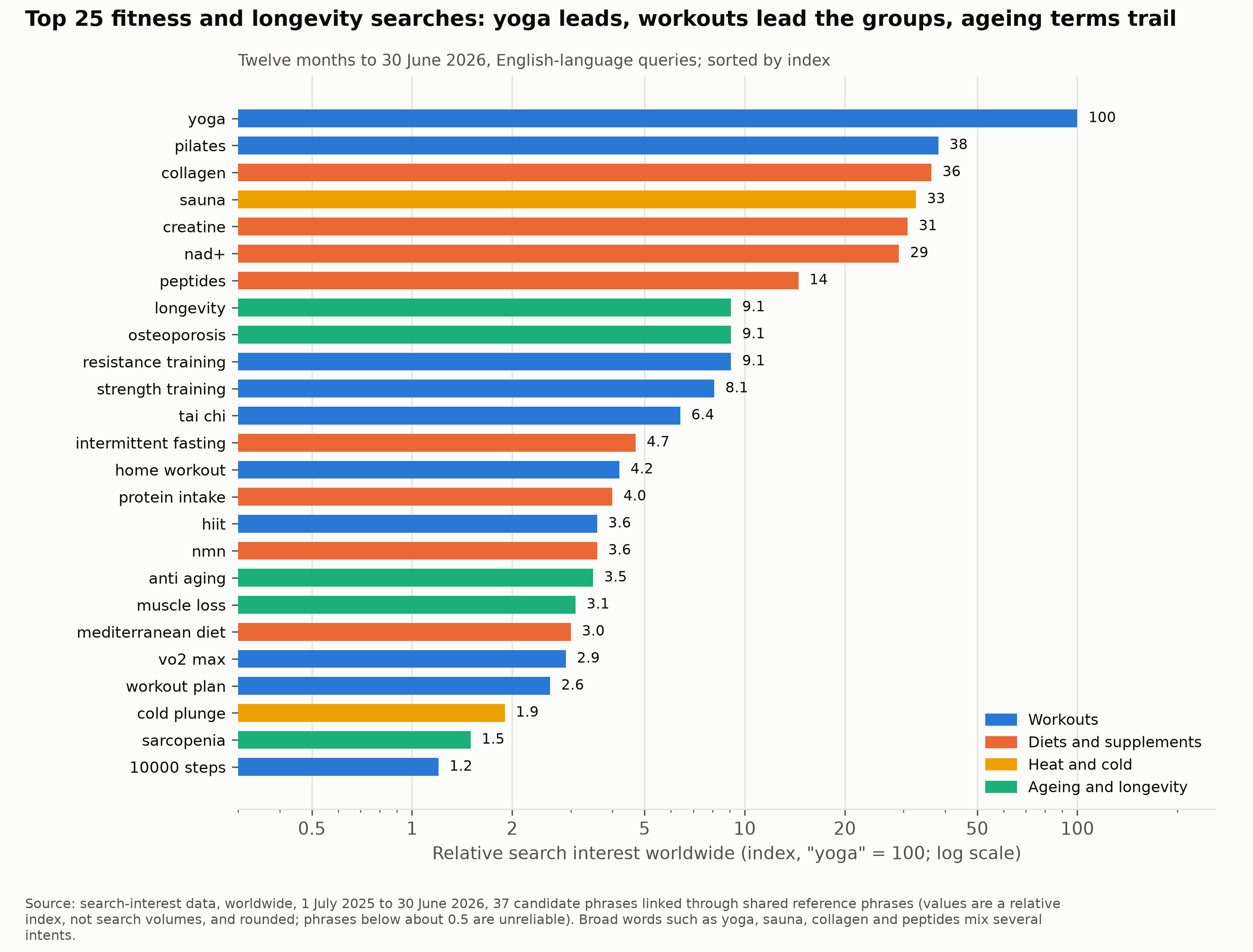
Chart 6: The top 25 fitness and longevity searches, as an index with yoga at 100.
Yoga leads, followed by pilates (38), collagen (36), sauna (33), creatine (31) and NAD+ (29). Strength training scores 8.1 and resistance training 9.1. “Longevity” scores 9.1. Added up across all 37 phrases, workout searches total 178, diets and supplements 126, sauna and cold plunge 35 and ageing and longevity terms 28, lower than pilates alone. “Healthy aging” scores 0.5.
A caution: broad words such as yoga, sauna, collagen, peptides and NAD+ carry other intents, including skincare, spas and clinics. The data cannot say how many of those searchers care about ageing.
Which Healthy Aging Trends Have the Most Human Research?
For fifteen topics we set search interest against the number of randomised trials plus systematic reviews and meta-analyses in older adults from 2015 to 2025.
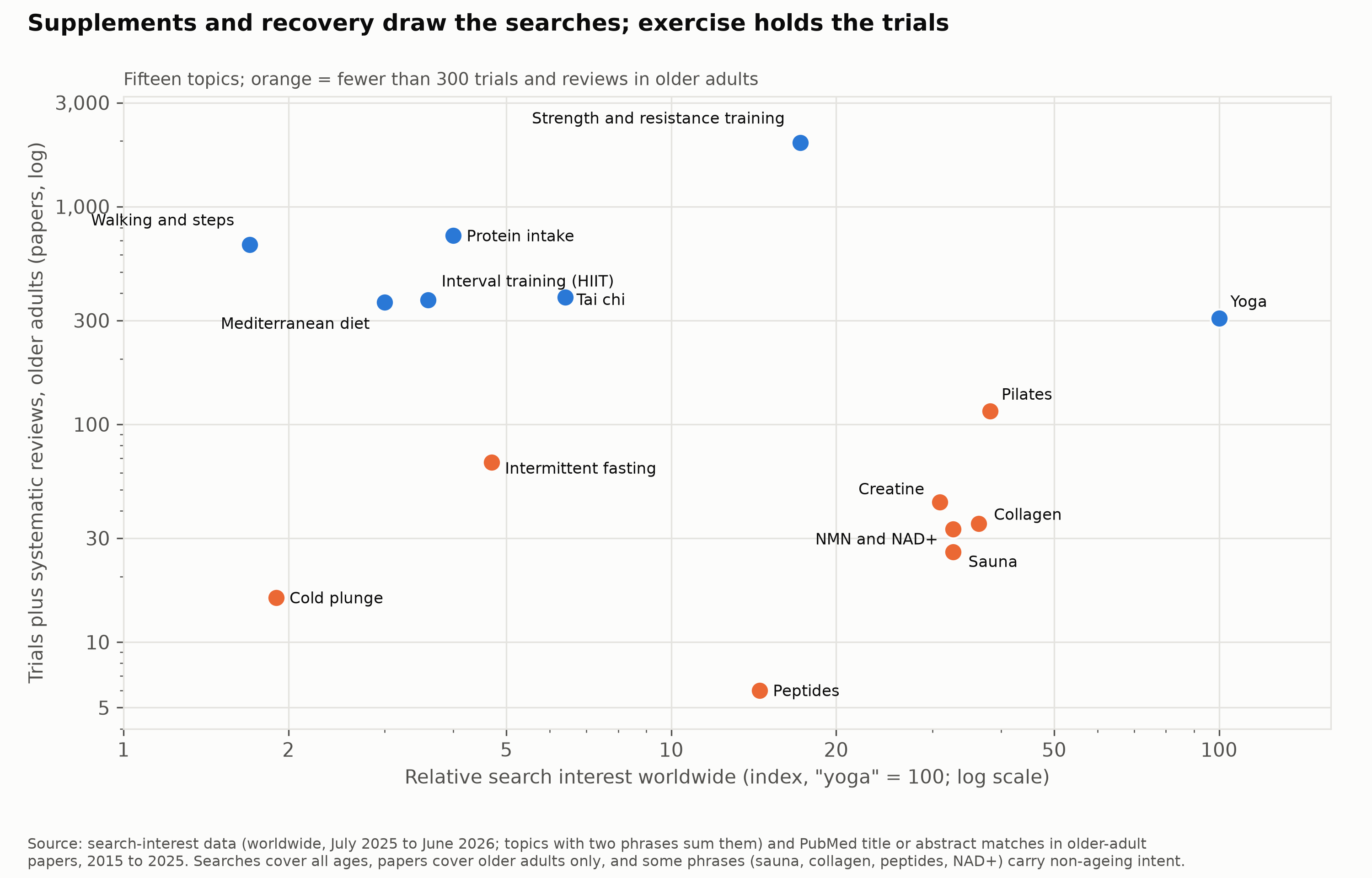
Chart 7: Search interest against trials and reviews in older adults, 15 topics.
Strength and resistance training has 1,967 trials and reviews and a search score of 17. Walking and steps has 670, protein intake 736, tai chi 383, interval training 373 and the Mediterranean diet 364.
Six topics sit in the opposite corner: collagen (35 trials and reviews, search 36), sauna (26, 33), NMN and NAD+ (33, 33), creatine (44, 31), peptides (6, 14) and cold plunge (16, 1.9). Added up, the six best-evidenced topics score 36 on search and have 4,493 trials and reviews. The six popular supplement and recovery topics score 149 and have 160. That is four times the search interest and about one-twenty-eighth of the evidence.
Searches cover all ages, but the publication counts are limited to older adults. Treat the comparison as a broad pattern.
Where Do Healthy Aging Research and Search Interest Lead?
Our last question was geographic. The map shows search interest in “longevity” and “healthy aging” by country (panel A) and exercise and ageing papers by the country of the first author (panel B).
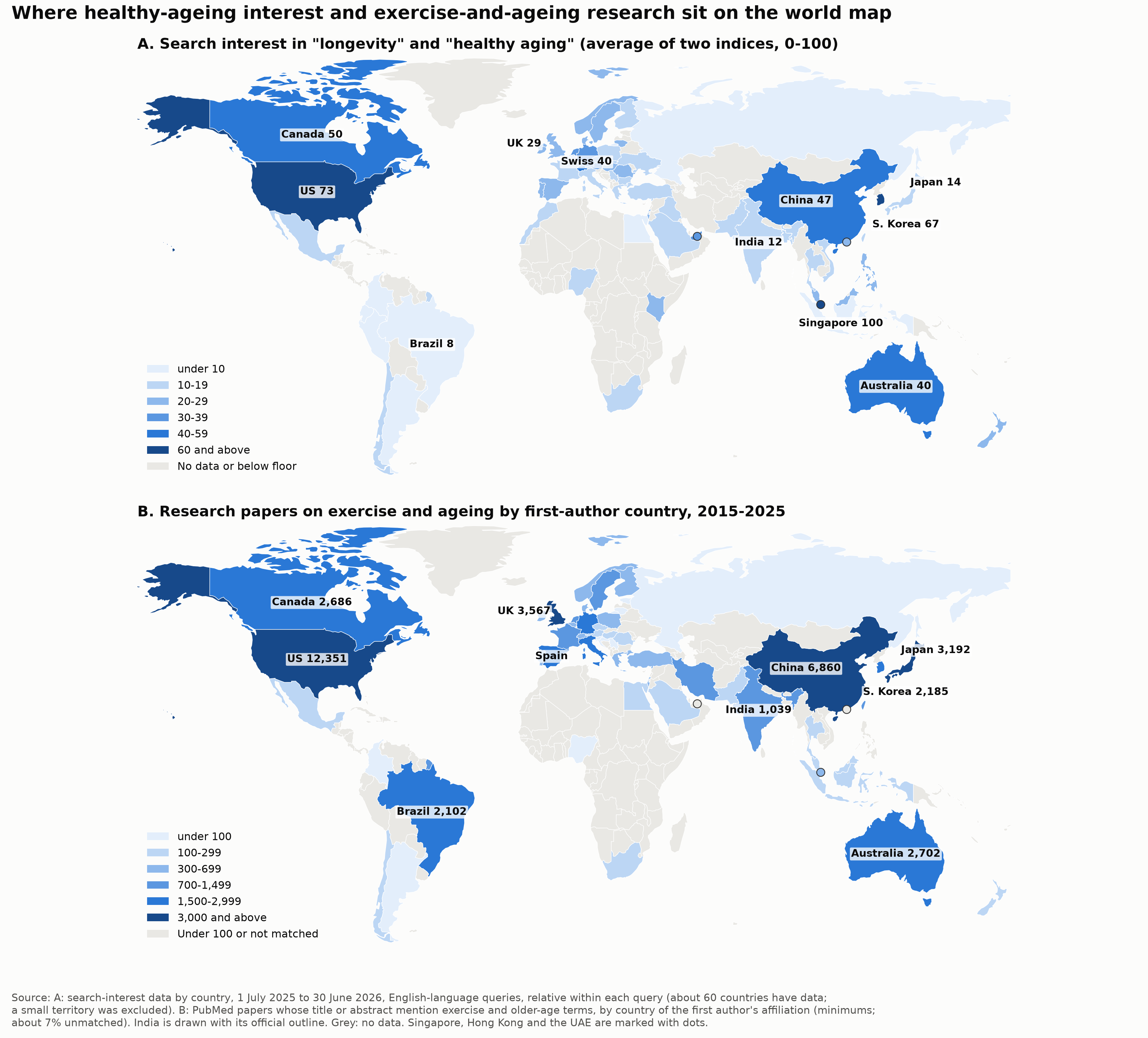
On research, the United States leads with 12,351 papers, or 20.5% of the 60,353 papers with an affiliation on record. China has 6,860. Together they account for 31.8%. The United Kingdom has 3,567, Japan 3,192, Australia 2,702, Canada 2,686, South Korea 2,185 and Brazil 2,102.
Search tells a different story. Singapore tops the index at 100, then the United States (73), South Korea (67), Canada (50), China (47), Switzerland and Australia (40 each). Singapore has 365 papers, and Brazil has 2,102 papers but a search index of 8. Across the 29 leading research countries with search data, the rank correlation between papers and search interest is 0.20, which is weak.
| Country | Papers 2015-2025 | Share randomised trials or reviews | Search index |
| United States | 12,351 | 10.3% | 73 |
| China | 6,860 | 16.4% | 47 |
| United Kingdom | 3,567 | 16.3% | 29 |
| Japan | 3,192 | 7.6% | 14 |
| Australia | 2,702 | 21.2% | 40 |
| Canada | 2,686 | 13.5% | 50 |
| South Korea | 2,185 | 9.7% | 67 |
| Brazil | 2,102 | 18.6% | 8 |
| Spain | 1,930 | 18.9% | 20 |
| Italy | 1,926 | 9.4% | 20 |
| Singapore | 365 | 13.7% | 100 |
Among countries with at least 500 papers, Iran (23.0%, 806 papers), Australia (21.2%), Denmark (19.0%) and Spain (18.9%) had the highest shares of trials and reviews. The corresponding shares were 10.3% in the United States, 9.7% in South Korea, 7.6% in Japan, and 7.9% in India.
What to Look for in a Healthy Aging Claim
This is a reading of the research, not medical advice. Anyone with a health condition should check with a doctor before changing their exercise routine or what they take. With that said, use four questions to evaluate a healthy aging claim.
First, ask what the study design was. Cohort studies say people who move more tend to live longer. Trials say exercise reduces falls and improves strength and balance. The second claim is better supported.
Second, check whether the headline is about people. “Extends lifespan” often means worms, yeast or mice.
Third, look for the number of participants and the confidence interval. A hazard ratio of 0.63 sounds large until its interval runs from 0.33 to 1.20.
Fourth, notice what the largest bodies say. The World Health Organization reports that, in adults and older adults, physical activity is associated with a lower risk of all-cause mortality and of falls, among other outcomes, and that nearly one third of the world’s adults, 1.8 billion, do not reach the global recommendation of at least 150 minutes of moderate activity a week (World Health Organization, 2026). A 2025 global consensus statement on exercise for older adults likewise concludes that tailored programs, especially multicomponent ones, help older people keep their function (Izquierdo et al., 2025). People aged 60 and over are set to double in number to 2.1 billion by 2050 (World Health Organization, 2025).
How Many Longevity Papers Are Trials or Reviews?
In 2025, randomized trials, systematic reviews, and meta-analyses made up 3.4% of the longevity papers counted in this analysis, compared with 3.6% in 2017. Tracking this share alongside publication counts can show whether these designs become more common as the field grows.
Methods and Limitations
Data and analysis. The news, search and research-paper analysis in this article was run with Fliar Prism (Fliar Business Intelligence, 2026a), and the research tools it uses are published as the open-source Prism MCP (Fliar Business Intelligence, 2026b). The supporting data tables, one per chart, accompany this article.
Research papers. (1) PubMed records, 2015 to 2025, whose title or abstract contain exercise terms and older-age terms; design comes from PubMed publication types and indexing terms, strongest label first. A paper is counted once. 2025 may be incomplete. (2) The pre-extracted layer holds papers cited at least 10 times, from 2017 to 2025, so recent papers and papers cited less are missing, and 2024 and 2025 are partial. We kept 4,086 papers after removing duplicate titles and titles about animals, children, or off-topic work. Topic groups come from title words, with two hand corrections. Design labels are coarse: about half of the “other intervention or lab” group in chart 2 are lab, gait-mechanics, or mechanism studies, not trials. The hand reading of 24 trials uses each paper’s reported main results; it is a visibility sample, not a systematic review. (3) Effects in chart 3 are as the papers report them; adjustment sets and comparison groups differ, and the falls row is a pooled estimate from a Cochrane review. (4) Topic counts in chart 7 use title and abstract words for older-adult papers, 2015 to 2025, and count randomized trials and systematic reviews or meta-analyses separately.
News. Two windows of 12 months, 1 June 2024 to 31 May 2025 and 1 June 2025 to 31 May 2026; collection thins after May 2026. The longevity lane is a phrase match on article opening text plus a health word, so it includes some academic abstracts and press releases and misses articles that never use those phrases. We hand-read 40 articles per window and 32 of each were on topic, so shares describe the lane, not exact topic prevalence. Counts are minimums. Theme shares use automatic labels at a score of 0.5 or higher; an article can carry several labels, and the tests flatter repeated articles. Frames in the text count articles that mention any word from a fixed list.
Search. Relative interest worldwide, 1 July 2025 to 30 June 2026, for 37 phrases, linked through shared reference phrases and rounded, so values below about 0.5 are unreliable. Phrases are in English, which favours English-speaking countries. Country values come from the same data for two phrases; about 60 countries returned values. A small territory with unusually high values was excluded from the map. The data show a drop after about July 2026, so we ended the window on 30 June.
Limits. Searches are for all ages and papers for older adults. Country counts use the first author’s affiliation, so a paper by a mobile researcher counts where they work; about 7% could not be matched and the tail beyond the 400 most common affiliation endings is not counted.
To a Fitter Healthier You,
Mind-Body Optimization Specialist
About the Author
Adriana Albritton is a Mind-Body Optimization Specialist and founder of FitnAll Coaching. She developed the FITNALL Method, a holistic framework that integrates fitness, internal health, thought patterns, nutrition, adaptation, longevity, and lifestyle habits to support sustainable fat loss and long-term wellness. Adriana is the author of 28 Days to a New Life: A Holistic Program to Get Fit, Delay Aging, and Enhance Your Mindset. She speaks and writes about holistic performance, longevity, and the integration of mind and body for optimal health.
References
- Aggio, D., Papachristou, E., Papacosta, O. et al. (2020) ‘Trajectories of physical activity from midlife to old age and associations with subsequent cardiovascular disease and all-cause mortality’, Journal of Epidemiology and Community Health, 74(2). Available at: https://pubmed.ncbi.nlm.nih.gov/31704805/ (Accessed: 11 November 2026).
- Fliar Business Intelligence (2026a) Fliar Prism: news, search and research-paper analysis [Data and analysis platform]. Available at: https://fliarbi.com/prism/ (Accessed: 11 November 2026).
- Fliar Business Intelligence (2026b) Prism MCP: open-source research tools [Software]. GitHub. Available at: https://github.com/fliarbi/prism-mcp (Accessed: 11 November 2026).
- Izquierdo, M., de Souto Barreto, P., Arai, H. et al. (2025) ‘Global consensus on optimal exercise recommendations for enhancing healthy longevity in older adults (ICFSR)’, The Journal of Nutrition, Health & Aging, 29(1). Available at: https://pubmed.ncbi.nlm.nih.gov/39743381/ (Accessed: 11 November 2026).
- Jefferis, B.J., Parsons, T.J., Sartini, C. et al. (2019) ‘Objectively measured physical activity, sedentary behaviour and all-cause mortality in older men: does volume of activity matter more than pattern of accumulation?’, British Journal of Sports Medicine, 53(16). Available at: https://pubmed.ncbi.nlm.nih.gov/29440040/ (Accessed: 11 November 2026).
- LaMonte, M.J., Buchner, D.M., Rillamas-Sun, E. et al. (2018) ‘Accelerometer-measured physical activity and mortality in women aged 63 to 99’, Journal of the American Geriatrics Society, 66(5). Available at: https://pubmed.ncbi.nlm.nih.gov/29143320/ (Accessed: 11 November 2026).
- Lenze, E.J., Voegtle, M., Miller, J.P. et al. (2022) ‘Effects of mindfulness training and exercise on cognitive function in older adults: a randomized clinical trial’, JAMA, 328(22). Available at: https://pubmed.ncbi.nlm.nih.gov/36511926/ (Accessed: 11 November 2026).
- Li, F., Harmer, P., Fitzgerald, K. et al. (2018) ‘Effectiveness of a therapeutic Tai Ji Quan intervention vs a multimodal exercise intervention to prevent falls among older adults at high risk of falling: a randomized clinical trial’, JAMA Internal Medicine, 178(10). Available at: https://pubmed.ncbi.nlm.nih.gov/30208396/ (Accessed: 11 November 2026).
- Liu-Ambrose, T., Davis, J.C., Best, J.R. et al. (2019) ‘Effect of a home-based exercise program on subsequent falls among community-dwelling high-risk older adults after a fall: a randomized clinical trial’, JAMA, 321(21). Available at: https://pubmed.ncbi.nlm.nih.gov/31162569/ (Accessed: 11 November 2026).
- Nutrition Insight (2026) Supplement industry demands human trials to prove ageless vitality science, 27 April. Available at: https://www.nutritioninsight.com/news/healthy-aging-evidence-gaps.html (Accessed: 11 November 2026).
- Sanders, L.M.J., Hortobágyi, T., Karssemeijer, E.G.A. et al. (2020) ‘Effects of low- and high-intensity physical exercise on physical and cognitive function in older persons with dementia: a randomized controlled trial’, Alzheimer’s Research & Therapy, 12, 28. Available at: https://pubmed.ncbi.nlm.nih.gov/32192537/ (Accessed: 11 November 2026).
- Sherrington, C., Fairhall, N.J., Wallbank, G.K. et al. (2019) ‘Exercise for preventing falls in older people living in the community’, Cochrane Database of Systematic Reviews, 1. Available at: https://pubmed.ncbi.nlm.nih.gov/30703272/ (Accessed: 11 November 2026).
- Stensvold, D., Viken, H., Steinshamn, S.L. et al. (2020) ‘Effect of exercise training for five years on all cause mortality in older adults: the Generation 100 study: randomised controlled trial’, BMJ, 371, m3485. Available at: https://pubmed.ncbi.nlm.nih.gov/33028588/ (Accessed: 11 November 2026).
- Villareal, D.T., Aguirre, L., Gurney, A.B. et al. (2017) ‘Aerobic or resistance exercise, or both, in dieting obese older adults’, New England Journal of Medicine, 376(20). Available at: https://pubmed.ncbi.nlm.nih.gov/28514618/ (Accessed: 11 November 2026).
- Watts, E.L., Matthews, C.E., Freeman, J.R. et al. (2022) ‘Association of leisure time physical activity types and risks of all-cause, cardiovascular, and cancer mortality among older adults’, JAMA Network Open, 5(8). Available at: https://pubmed.ncbi.nlm.nih.gov/36001316/ (Accessed: 11 November 2026).
- World Health Organization (2026) Physical activity [Fact sheet]. Available at: https://www.who.int/news-room/fact-sheets/detail/physical-activity (Accessed: 11 November 2026).
- World Health Organization (2025) Ageing and health [Fact sheet]. Available at: https://www.who.int/news-room/fact-sheets/detail/ageing-and-health (Accessed: 11 November 2026).