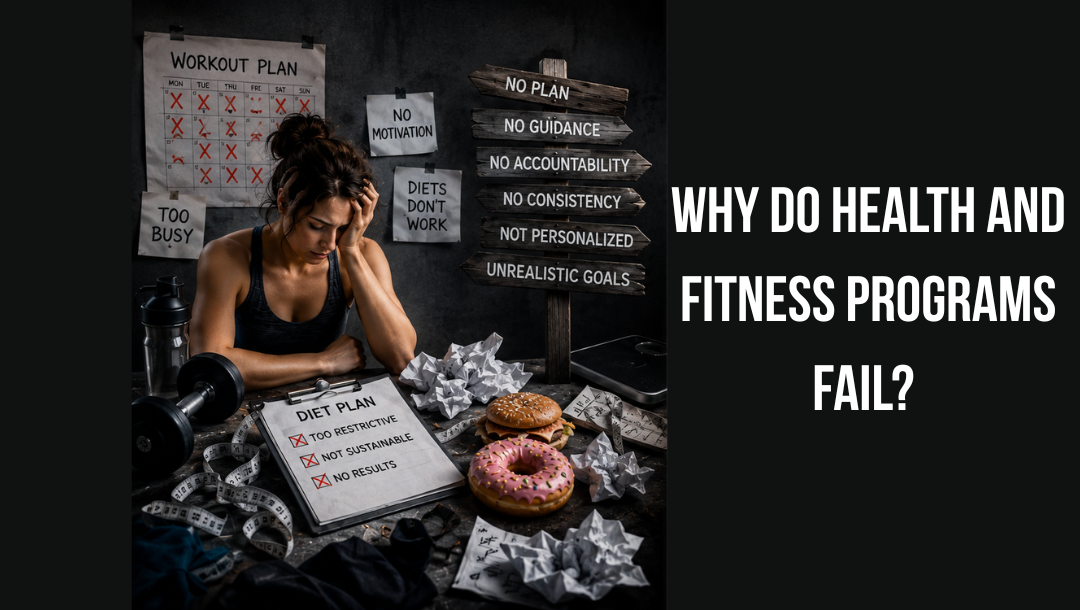
If you’ve ever promised yourself that this time will be different—starting a new diet on Monday, joining a gym with the best intentions, or downloading the latest fitness app only to lose momentum a few weeks later—you’ve probably wondered why it keeps happening. You may even have questioned your motivation, discipline, or willpower. But here’s the truth: the problem isn’t you. Most health and fitness programs fail not because people fail, but because the programs aren’t designed around real human behavior. Lasting change isn’t built through willpower alone. It’s built through consistency, personalization, sustainable habits, and the ability to adapt when life inevitably gets in the way. In this article, you’ll discover why so many health and fitness programs fail and, more importantly, how to get lasting results.
The Problem Isn’t Lack of Information
Today, you have access to more health and fitness information than at any other time in history. With just a few clicks, you can find thousands of workout plans, millions of nutrition articles, countless podcasts, YouTube videos, and social media influencers sharing advice on how to live a healthier life. Yet despite having more information than ever before, rates of obesity, chronic disease, stress, anxiety, and burnout continue to rise.
Why? Because knowing what to do isn’t the same as actually doing it.
You probably already know that you should:
- Exercise regularly.
- Eat more whole, nutrient-dense foods.
- Get seven to nine hours of quality sleep each night.
- Stay well hydrated.
- Manage your stress effectively.
- Limit ultra-processed foods and added sugars.
The challenge isn’t a lack of knowledge; it’s applying that knowledge consistently. Lasting change isn’t achieved by learning one more tip or reading another article. It’s achieved by turning healthy choices into sustainable daily habits that fit your lifestyle.
Why Motivation Isn’t Enough
You may think that you need to feel motivated before you can make healthy choices. The truth is, motivation is unreliable. Some days you’ll wake up energized and ready to tackle your workout or prepare healthy meals. Other days, you’ll feel exhausted, stressed, tired, or simply not in the mood – disrupting even the best intentions.
If your health depends entirely on feeling motivated, your progress will likely stall whenever life gets in the way. Instead of relying on motivation alone, focus on building systems. Create routines and healthy habits that make the right choices easier, even on the days when you don’t feel like exercising or eating well.
The people who achieve lasting results aren’t necessarily the most motivated; they’re the most consistent. They understand that small, sustainable actions repeated day after day will always outperform short bursts of intense effort. In the long run, consistency, not intensity, is how you get lasting results and transform your health.
Health and Fitness Programs Fail due to One-Size-Fits-All Plans

One of the biggest reasons health and fitness programs fail is that they assume the same approach will work for everyone. But your body, lifestyle, and goals are unique, which means your health plan should be too.
Think about it. Your fitness journey is influenced by many factors, including your health and fitness goals, current fitness level and body composition, medical history, stress levels, daily schedule, sleep quality, previous injuries or physical limitations, and nutritional preferences or dietary restrictions.
A workout that helps one person thrive may be too challenging or not challenging enough for you. Likewise, a meal plan designed for someone training six days a week may be unrealistic if you’re balancing a demanding career, raising children, or caring for loved ones.
That’s why personalization isn’t a luxury; it’s a necessity. The more your health and fitness plan fits your unique lifestyle and needs, the more likely you are to stick with it over the long term. And consistency is what ultimately gets lasting results.
Healthy Habits Beat Short-Term Motivation
Many health and fitness programs fail because they encourage you to focus almost exclusively on the end goal: lose 20 pounds, build muscle, run a marathon, or fit into a certain clothing size. While having goals can give you direction, they shouldn’t be your primary focus.
Instead, shift your attention to building habits that move you closer to those goals. Long-term success isn’t the result of one big decision; it’s the result of hundreds of small, healthy choices made consistently over time.
These habits might include:
- Taking a walk or engaging in a physical activity most days out of the week.
- Preparing healthy meals in advance.
- Drinking enough water throughout the day.
- Completing your scheduled workouts.
- Managing stress through relaxation techniques or mindfulness.
- Prioritizing quality sleep each night.
- Allowing your body adequate time to recover.
None of these actions may seem extraordinary on their own, but together they create powerful momentum. When you repeat these healthy habits day after day, week after week, and month after month, they become part of your lifestyle. That’s when you get lasting results.
Diets Often Focus on Restriction Instead of Sustainability
If you’ve ever been tempted by a diet promising rapid weight loss, you’re not alone. Many popular eating plans advertise quick results by encouraging you to eliminate carbohydrates, avoid fats, drastically reduce calories, or follow extended fasting schedules.
While these approaches may lead to short-term weight loss for some people, they are often difficult to maintain over the long run. Eventually, many people return to their previous eating habits, and the weight they lost gradually returns—a cycle commonly known as “yo-yo dieting.”
Instead of asking yourself, “What’s the fastest way to lose weight?”, try asking a more important question: “What way of eating can I realistically enjoy and maintain for years?” The answer to that question is far more likely to lead to lasting success.
Sustainable nutrition isn’t about deprivation or following the latest fad. It’s about developing healthy eating habits that fit your lifestyle, provide your body with the nutrients it needs, and support your long-term health and fitness goals. When you choose an approach that you can realistically maintain, healthy eating becomes part of your everyday life rather than a temporary diet, and that’s when lasting results become possible.
Transformation Requires a Holistic Approach
Health and fitness programs fail because they don’t incorporate a holistic approach. Most programs focus on fitness. While exercise is one of the most powerful tools for improving your health, it isn’t enough by itself. Exercise is only one piece of a much larger puzzle. While regular physical activity plays a vital role in improving your strength, cardiovascular fitness, mobility, and overall well-being, it cannot compensate for unhealthy habits in other areas of your life.
A truly healthy lifestyle requires a holistic approach—one that recognizes that your body and mind are deeply interconnected. Your long-term health is influenced by many factors working together, including:
- Nutritious, balanced eating
- Quality sleep
- Effective stress management
- Proper recovery
- Emotional and mental well-being
- Daily movement beyond structured exercise
- Adequate hydration
- Healthy relationships and social connection
- A positive, growth-oriented mindset
- Consistency in your daily habits
Think of your health like a table. Exercise is one leg, but nutrition, sleep, stress management, recovery, and mindset are equally important. If one or more of those legs becomes weak, the entire structure becomes unstable. That’s why you can’t out-exercise poor sleep. You can’t out-train chronic stress. And you can’t expect workouts alone to overcome consistently unhealthy eating habits.
Instead of viewing health as simply going to the gym or burning calories, begin seeing it as the result of many healthy choices working together every day. When you adopt a mind-body approach to burn fat or to improve your health, you nurture your body, mind, and spiritual life as a whole. This creates a strong foundation for better energy, improved performance, disease prevention, and long-term well-being.
True transformation doesn’t come from focusing on just one aspect of your health; it comes from taking care of all aspects of your being.
The Missing Piece: Behavior Change
Most health and fitness programs fail because they skip behavior change principles. If you want to get lasting results, it’s important to understand one fundamental truth: transformation is rooted in behavior change. Your success isn’t determined by finding the perfect diet or the best workout program; it’s determined by the habits you practice every day. Healthy behaviors don’t become automatic overnight. They develop gradually through repetition, consistency, and intentional effort until they become part of your lifestyle.
Research in behavioral science shows that you’re far more likely to build lasting healthy habits when you:
- Set specific, achievable goals.
- Monitor and track your progress consistently.
- Receive regular guidance and feedback.
- Integrate healthy behaviors into your daily routines until they become habits.
- Celebrate small victories to build confidence and motivation.
Accountability is another important behavior change technique. Have you ever noticed that you’re more likely to follow through on a commitment when someone else is expecting you to?
People are more likely to achieve their goals when they have someone—or something—helping them stay on track. Accountability increases consistency by providing encouragement, structure, and a sense of commitment, especially during the times when motivation begins to fade.
This is one of the reasons personal trainers, health coaches, and wellness professionals can be so effective. Unfortunately, one-on-one coaching isn’t always practical or affordable for everyone.
That’s where technology is transforming the way people manage their health. Today’s AI-powered coaching platforms can provide many of the same benefits daily, helping you bridge the gap between knowing what you should do and consistently taking action and maintaining momentum even when life gets busy.
These evidence-based strategies help transform healthy choices into automatic behaviors that are part of your lifestyle, making long-term success much more achievable.
How to Get Lasting Results: A Smarter, Integrative Approach
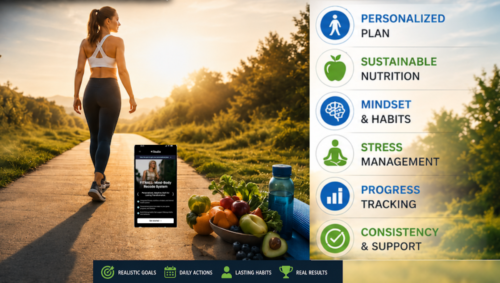
By now, you’ve seen why so many health and fitness programs fail. They often rely on motivation, focus on short-term results, take a one-size-fits-all approach, or emphasize only one aspect of health while ignoring the others.
If you want lasting results, you need something different. You need a system that helps you build healthy habits, adapt to life’s challenges, and support every aspect of your well-being, not just your workouts.
After spending years studying fitness, nutrition, psychology, and behavior change, and working with people from different backgrounds, I became convinced that lasting transformation requires more than workouts or meal plans. It requires a comprehensive, science-based approach that helps you create a healthier lifestyle you can maintain for years. That’s why I developed the FITNALL Method™.
Rather than focusing on a single aspect of health, the FITNALL Method™ takes a holistic approach by integrating the key pillars that work together to improve your overall well-being:
- Progress tracking and accountability to help you stay focused, motivated, and consistent over time.
- Personalized fitness to help you move safely and effectively based on your goals and abilities.
- Sustainable nutrition that nourishes your body without relying on restrictive diets.
- Mindset and behavior change to help you build habits that last.
- Stress management to improve resilience, emotional regulation, and long-term health.
- Recovery and quality sleep to allow your body and mind to repair, recharge, and perform at their best.
- Progress tracking and accountability to help you stay focused, motivated, and consistent over time.
Instead of relying on motivation, the goal is to help you become consistent and create a lifestyle you can maintain long-term.
Every healthy choice you make strengthens the next one. Choosing a nutritious meal makes it easier to make another healthy choice later in the day. Completing a workout builds confidence to stay active tomorrow. Drinking enough water, prioritizing sleep, and managing stress all reinforce one another, creating positive momentum that carries you forward.
Over time, those small daily actions become healthy habits. Healthy habits become part of your lifestyle. And that lifestyle becomes the foundation for lasting wellness.
Remember, lasting transformation isn’t created by one perfect workout, one perfect meal, or one perfect week. It’s created by making better choices consistently—and giving yourself the tools and support to keep moving forward, even when life gets busy.
Ready to Stop Starting Over?
If you’re tired of starting over and ready to build healthy habits that actually last, the FITNALL AI-Powered Coaching App was created for you.
Rather than focusing only on workouts or diets, FITNALL provides a comprehensive, personalized approach to improving your overall well-being. You’ll receive guidance for fitness, nutrition, mindset, stress management, recovery, healthy habit development, and long-term lifestyle change—all in one easy-to-use platform.
Think of FITNALL as your personal wellness coach, available whenever you need it. Whether you’re just beginning your health journey or looking to take your results to the next level, you’ll receive the daily guidance, accountability, and encouragement needed to stay consistent even when life gets in the way.
You don’t need another quick fix. You need a system that works in the real world.
If you’re ready to stop chasing temporary results and start building a healthier, stronger, and more resilient future, explore the FITNALL AI-Powered Coaching App today and start building a healthier future—one sustainable habit at a time.
Final Thoughts
If you’ve struggled with diets, workout programs, or wellness challenges in the past, don’t assume you’ve failed. More often than not, the problem wasn’t you—it was the program.
Many health and fitness programs are built around short-term motivation, unrealistic expectations, or one-size-fits-all solutions. Real life doesn’t work that way. Your schedule and family responsibilities change. Stress happens. Unexpected challenges arise. A successful health plan should adapt to your life—not expect your life to revolve around it.
The best health and fitness program isn’t the most restrictive. It isn’t the most complicated. And it certainly isn’t the one promising overnight transformation. The best program is the one you can follow consistently while balancing work, family, travel, and everything else life brings.
Remember, lasting health isn’t built by making one perfect decision. It’s built by making better decisions more consistently.
Every healthy meal. Every workout. Every walk. Every good night’s sleep. Every glass of water. Every moment you choose to deal with stress positively instead of reacting. Those small actions may seem insignificant on their own, but together they create extraordinary results over time.
Your goal shouldn’t be perfection. Your goal should be progress. Because when healthy choices become healthy habits, those habits become your lifestyle, and that’s how you get lasting results.
To a Fitter Healthier You,
Mind-Body Optimization Specialist
About the Author
Adriana Albritton is a Mind-Body Optimization Specialist and founder of FitnAll Coaching. She developed the FITNALL Method, a holistic framework that integrates fitness, internal health, thought patterns, nutrition, adaptation, longevity, and lifestyle habits to support sustainable fat loss and long-term wellness. Adriana is the author of 28 Days to a New Life: A Holistic Program to Get Fit, Delay Aging, and Enhance Your Mindset. She speaks and writes about holistic performance, longevity, and the integration of mind and body for optimal health.