
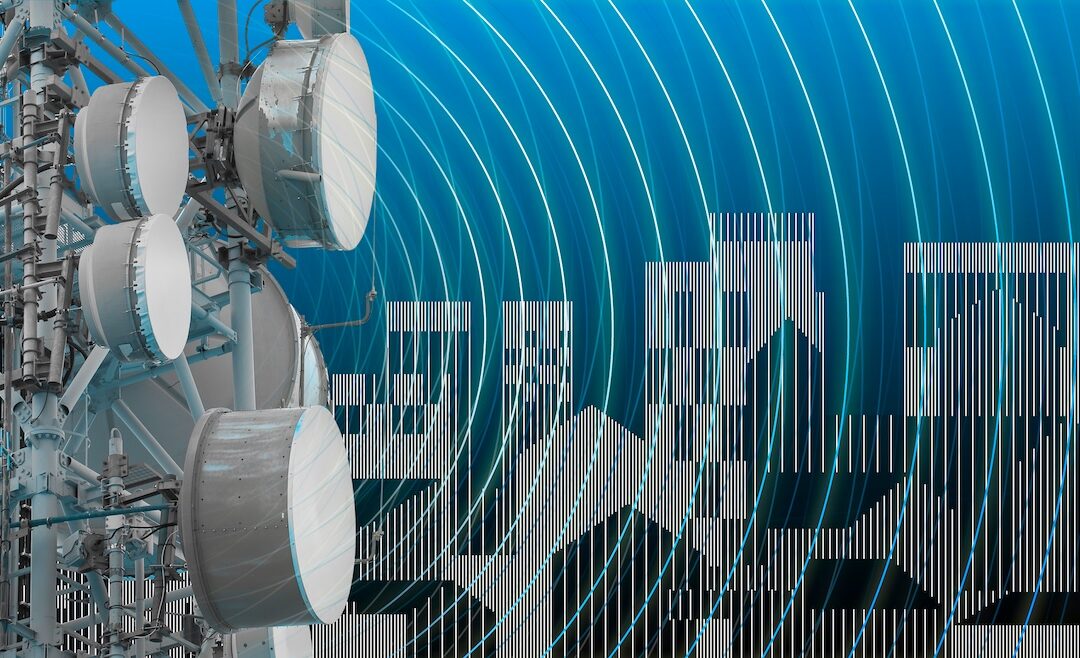
Wireless technology has become a permanent part of modern life. Smartphones, Wi-Fi routers, Bluetooth devices, smart homes, and cellular towers now surround us in an invisible web of signals. While these technologies provide incredible convenience, they also expose the human body to constant radiofrequency (RF) electromagnetic radiation. For most of human history, our exposure to artificial electromagnetic fields was minimal. Today, however, the average household contains dozens of wireless devices, and cellular towers operate continuously to support the global communication network. This article delves into RF and EMF radiation, RF-EMF radiation health risks, and ways to reduce EMF exposure to create a healthier environment.
Radiation: What To Know
Radiation is a form of energy that travels through space in waves or particles and can interact with living tissues, sometimes causing biological effects depending on its type and level of exposure. EMF radiation health risks include cell damage, disruption of biological processes, and the increased likelihood of health problems.
EMF Radiation
EMF radiation refers to the energy produced by electromagnetic fields (EMFs), which are created whenever electricity flows or electromagnetic waves travel through space. These fields exist naturally in the environment and are also generated by many modern technologies.
Electromagnetic radiation moves in waves and includes a broad range of energy types across what is known as the electromagnetic spectrum.
Common sources of EMF radiation include:
- Wireless Devices: Smartphones, tablets, smart watches, bluetooth headphones
- Home Electronics: Wi-Fi routers, smart TVs, wireless printers, smart home systems
- Infrastructure: Cellular towers, power lines, radio and television transmitters
Because modern life relies heavily on electrical systems and wireless communication, people are exposed to EMF radiation daily.
RF Radiation
Radiofrequency (RF) radiation is a specific portion of the electromagnetic spectrum used for wireless communication. RF radiation falls within the high-frequency end of non-ionizing EMFs and is used to transmit information through the air. It does not directly break molecular bonds the way X-rays or gamma rays can. However, non-ionizing does not necessarily mean biologically inert.
Common sources include:
- Cell phones
- Wi-Fi routers
- Bluetooth devices
- Smart home electronics
- Cellular towers and antennas
In 2011, the International Agency for Research on Cancer – IARC classified RF electromagnetic radiation as a “possible human carcinogen” (Group 2B) after studies suggested increased risks of certain brain tumors among heavy wireless phone users. This classification places RF radiation in the same category as substances such as lead and engine exhaust, indicating credible evidence of potential risk.
5G
5G networks began appearing in 2019 in a few countries. However, 2020 marked the year when large-scale expansion began. The rollout of 5G has been promoted as a breakthrough for faster internet, smart cities, autonomous vehicles, and the Internet of Things. While this infrastructure supports faster data speeds and reduced latency, it also raises new questions about cumulative radiofrequency (RF) radiation exposure since it requires a massive amplification of wireless infrastructure to support the network.
5G (fifth-generation wireless technology) is a type of RF radiation that relies on a far denser network of antennas and transmitters than previous wireless generations. Earlier generations of wireless networks relied primarily on large towers spaced miles apart but 5G requires many smaller antennas placed closer to users. These can be installed on utility poles, streetlights, buildings, residential neighborhoods, and public infrastructure.
In urban areas, antennas may be placed every few hundred feet to maintain signal strength. While individual antennas may emit lower power levels than traditional towers, the density of transmitters dramatically increases the number of radiation sources within communities. Consequently, people get exposed to RF signals from multiple directions simultaneously around the clock.
Some 5G systems use millimeter waves, which are higher-frequency electromagnetic waves than those used by most current cellular networks. They interact primarily with skin tissues, sweat glands, the eyes, and surface nerve endings – areas that play important roles in immune signaling, temperature regulation, and nervous system communication. EMF radiation health risks includes the disruption of neural signaling pathways and inflammatory responses, as well as the creation of oxidative stress.
Cell Tower Radiation and Community Exposure
Cell towers form the backbone of wireless infrastructure, transmitting signals across large geographic areas. Because these towers operate 24 hours a day, nearby residents may experience constant background exposure to RF radiation.
Many communities have raised concerns about tower placement near:
- Residential neighborhoods
- Schools
- Hospitals
- Parks and playgrounds
Advocacy groups point out that federal regulations currently limit the ability of local governments to challenge tower placement based on health concerns related to RF radiation. For example, the 704 No More initiative argues that Section 704 of the Telecommunications Act limits the ability of local communities to challenge cell tower placement based on RF-EMF radiation health risks.
RF and EMF Radiation Health Risks
The scientific debate surrounding RF and EMF radiation is ongoing, but a number of studies have examined biological responses to electromagnetic fields.
According to research, RF and EMF radiation health risks are associated with:
- Potential increased cancer risk
- Radiofrequency sickness (symptoms such as headaches, fatigue, sleep disturbances)
- Electromagnetic hypersensitivity, including dizziness, cognitive difficulties, and insomnia
- Changes in biochemical markers
- Oxidative stress in cells
- Changes in brain activity
- Hormonal and neurological effects
- Disruption in neural signaling pathways and inflammatory responses
Children may be particularly vulnerable because their developing nervous systems and thinner skulls can absorb more radiation relative to body size.
👉🏻 One practice that helps activate cellular repair mechanisms is fasting. During fasting, the body shifts from constant digestion to a state of metabolic repair and renewal. This transition can stimulate autophagy, the body’s internal system for removing damaged cells and recycling cellular components, which supports overall health, resilience, and healthy aging.
Environmental Effects of RF and EMF Radiation
RF and EMF radiation health risks are not only pertinent to humans. Researchers have begun investigating its effects on ecosystems.
Scientists have investigated possible effects on:
- Bird navigation systems
- Pollinating insects such as bees
- Plant growth and cellular signaling
Because many organisms rely on natural electromagnetic signals for navigation and biological regulation, artificial electromagnetic fields could potentially disrupt these processes. Research in this area remains ongoing but highlights the importance of developing technologies responsibly.
The Precautionary Principle
Given the widespread nature of wireless technology and the remaining scientific uncertainty, some researchers advocate applying the precautionary principle. This public health strategy encourages minimizing exposure to potential hazards when evidence of risk exists but is not yet fully conclusive.
This principle has historically been applied to issues such as tobacco smoke, asbestos, and environmental pollutants before definitive proof of harm was established. As wireless technology continues to evolve, applying precautionary strategies may help protect vulnerable populations while research continues.
RF and EMF Detox: Ways to Reduce RF and EMF Exposure in Your Home
RF and EMF radiation health risks are vast and even though you can’t eliminate these technologies, there are many practical steps you can take to reduce unnecessary exposure in your home environment.
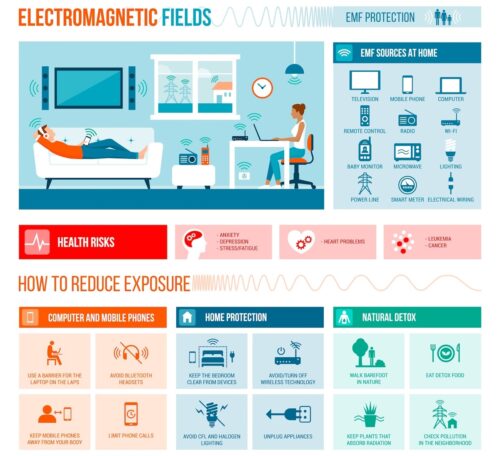
Below are ten effective strategies to help create a cleaner and healthier wireless space:
1. Use Wired Internet Instead of Wi-Fi
One of the most effective ways to reduce EMF exposure is by switching to wired internet connections whenever possible.
Using Ethernet cables for computers, smart TVs, and gaming consoles eliminates the need for constant wireless signals. Wired connections also offer faster speeds, better stability, and improved cybersecurity.
If a full transition isn’t possible, consider using Wi-Fi only when needed.
2. Turn Off Wi-Fi at Night
Many Wi-Fi routers transmit signals continuously even when no devices are actively using the network.
Turning off your router during sleeping hours can significantly reduce overnight exposure. Some routers allow you to schedule automatic shutoff times.
Reducing nighttime electromagnetic exposure may also support better sleep quality.
3. Keep Your Phone Away From Your Body
Cell phones emit RF radiation when sending and receiving signals. Carrying phones directly against the body, such as in pockets or bras, can increase localized exposure.
Instead:
- Carry phones in bags when possible
- Use speaker mode during calls
- Use wired headsets rather than Bluetooth devices
Even small increases in distance between your body and your phone can dramatically reduce radiation exposure.
4. Avoid Sleeping With Your Phone Nearby
Many people keep their phones on the nightstand or even under their pillow.
If you use your phone as an alarm clock, place it several feet away from the bed or switch it to airplane mode overnight.
This prevents the device from constantly communicating with nearby towers or Wi-Fi networks while you sleep.
5. Reduce Smart Home Devices
Smart home technology, including smart speakers, wireless security cameras, and connected appliances, continuously emits wireless signals.
Reducing the number of always-on wireless devices in your home can significantly lower the total electromagnetic load.
Consider using wired alternatives when available.
6. Use Airplane Mode When Possible
When phones or tablets are placed in airplane mode, their wireless transmitters are disabled.
This simple setting is especially helpful when:
- Sleeping
- Carrying your phone in a pocket
- Letting children use devices for games or videos
Airplane mode dramatically reduces RF radiation from the device.
7. Create a Low-EMF Bedroom
Sleep is one of the most important periods for cellular repair and recovery. Creating a low-EMF sleeping environment is an important sleep hygiene routine that supports better rest and overall health.
Consider the following:
- Remove unnecessary electronics from the bedroom
- Turn off Wi-Fi overnight
- Keep phones and tablets away from the bed
- Avoid wireless baby monitors near sleeping areas
The bedroom is one of the easiest places to reduce electromagnetic exposure.
8. Limit Bluetooth Use
Bluetooth devices such as earbuds, watches, and fitness trackers emit low-level radiofrequency signals to communicate with other devices.
Although the power levels are relatively small, continuous exposure throughout the day adds to cumulative EMF exposure.
Whenever possible, use wired headphones or speakers instead.
9. Keep Routers Away From Living Spaces
Wi-Fi routers are one of the strongest sources of RF radiation in many homes.
Try to place routers:
- Away from bedrooms
- Away from areas where people sit for long periods
- At least several feet from sleeping areas
Avoid placing routers directly next to desks, couches, or beds.
10. Measure EMF Levels in Your Home
EMF meters allow homeowners to detect radiation sources and identify areas with elevated electromagnetic fields.
Measuring your environment can help you:
- Locate hidden radiation sources
- Reposition wireless devices
- Reduce unnecessary exposure
Many EMF meters are affordable and easy to use.
You don’t need to abandon modern technology to reduce electromagnetic exposure. Simple lifestyle adjustments can significantly decrease daily RF radiation.
Final Thoughts
Wireless technology has transformed communication, work, and everyday life. Yet this convenience also brings constant exposure to radiation that previous generations never experienced. RF and EMF radiation health risks are real. Reducing RF and EMF exposure doesn’t require eliminating technology. Instead, it means becoming aware of radiation and making simple lifestyle adjustments to create a healthier environment and lower the electromagnetic burden in your home. Stay informed and and consider supporting 704 No More, an initiative advocating for the restoration of state and local authority to regulate sources of RF and EMF radiation within your community.
Frequently Asked Questions
Research on cell tower radiation is ongoing. Some studies have reported biological effects from long-term exposure to radiofrequency electromagnetic fields, while others find minimal risk. Many health experts recommend precautionary measures to reduce exposure.
2. Do Wi-Fi routers emit radiation?
Yes. Wi-Fi routers emit radiofrequency electromagnetic radiation to transmit wireless internet signals.
3. Is it safe to sleep near a phone?
No, keeping phones near the bed increases nighttime exposure to electromagnetic radiation and blue light. Using airplane mode or placing the phone farther away can reduce these exposures.
4. Is EMF radiation the same as RF radiation?
No. EMF radiation is a broad term that refers to all electromagnetic fields, while RF (radiofrequency) radiation is a specific type of EMF used for wireless communication. Devices such as cell phones, Wi-Fi routers, and Bluetooth electronics emit RF radiation, which falls within the non-ionizing portion of the electromagnetic spectrum.
5. Does 5G use RF radiation?
Yes. 5G technology uses radiofrequency (RF) electromagnetic radiation to transmit wireless signals. Like previous cellular technologies, 5G operates within the non-ionizing portion of the electromagnetic spectrum but often requires a denser network of antennas and small-cell transmitters to maintain signal strength.
6. Why are people concerned about cell tower radiation?
Some communities have raised concerns because cell towers operate continuously and expose nearby residents to constant background RF radiation. Research is ongoing to better understand long-term biological effects, particularly for individuals living close to towers or other wireless infrastructure.
7. Who may be more sensitive to EMF exposure?
Certain populations may be more vulnerable to electromagnetic exposure, including:
– Children with developing nervous systems
– Pregnant women
– Individuals reporting electromagnetic hypersensitivity
– People exposed to multiple wireless sources daily
Children may be particularly vulnerable because their thinner skulls and developing brains may absorb more radiation relative to body size.
8. What is electromagnetic hypersensitivity (EHS)?
Electromagnetic hypersensitivity is a condition reported by some individuals who experience symptoms they believe are linked to electromagnetic exposure. Commonly reported symptoms include headaches, fatigue, sleep disturbances, dizziness, and difficulty concentrating. Scientific research on EHS is ongoing.
9. Can reducing EMF exposure improve sleep?
Some people report better sleep when they reduce nighttime exposure to wireless devices. Turning off Wi-Fi routers at night, removing electronics from the bedroom, and placing phones in airplane mode may help create a lower-EMF sleep environment that supports healthy rest and recovery.
10. How can I reduce EMF exposure at home?
You can reduce exposure by following the tips to Reduce EMF exposure described above.
To a Fitter Healthier You,
The Fitness Wellness Mentor
About the Author
Adriana Albritton holds a Master’s degree in Forensic Psychology, is certified in personal training, nutrition, and detoxification, and is the founder of FitnAll Coaching and its accompanying blog. She is the author of 28 Days to a New Life: A Holistic Program to Get Fit, Delay Aging, and Enhance Your Mindset, and a coauthor of The Better Business Book Volumes II and III. With a background in mental health, Adriana brings a holistic, science-backed approach to wellness. She combines mindset coaching, fitness, and nutrition to help people stay lean, energized, healthy, and centered. As part of Health Six FIT, she’s also helping reshape healthcare through AI-driven, integrative wellness education.