Are you doing everything “right,” working out, eating clean, and trying to manage stress, yet still struggling with fatigue, weight gain, mood swings, or poor sleep? What if the missing piece isn’t your routine, but the internal system quietly orchestrating it all—your hormones? When hormones are balanced, everything flows—energy is stable, metabolism is efficient, and your mind is clear. But when they’re out of sync, your body sends signals that something deeper needs attention. Hormonal imbalances don’t happen randomly. Understanding what hormones do, how they affect your body, hormonal imbalance symptoms, and hormonal imbalance causes is the first step toward taking back control of your health.
What Are Hormones and Why Do They Matter?
Hormones are chemical signals secreted by endocrine glands. They travel through the bloodstream to organs and tissues, regulating physiology and behavior. Hormones are incredibly potent, regulating vital processes.
Here are some of the most important hormones:
Insulin
- Produced by: Pancreas
- Function: Helps regulate blood sugar by allowing glucose into cells for energy
Cortisol
- Produced by: Adrenal glands
- Function: Stress hormone; helps regulate metabolism, blood pressure, and inflammation
Thyroid Hormones (T3 & T4)
- Produced by: Thyroid gland
- Function: Control metabolism, body temperature, brain function, and energy
Estrogen
- Produced by: Ovaries and adrenals (in women) and testes/adrenals (in men)
- Function: Regulates menstrual cycle, bone density, mood, and libido in women. Estrogen supports sperm development and libido. Estrogen also influences serotonin and dopamine, bone density, and influences where fat is stored
Progesterone
- Produced by: Ovaries and placenta (in women) and testes/adrenals (in men)
- Function: In women, progesterone prepares the uterus for pregnancy, balances estrogen, and has a calming effect. In men, progesterone supports testosterone production, helps regulate mood and brain function, acts as a neurosteroid (affects the nervous system), and balances the effects of estrogen
Testosterone
- Produced by: Testes (men), ovaries/adrenals (women)
- Function: Builds muscle, bone, libido, motivation, energy
Melatonin
- Produced by: Pineal gland
- Function: Regulates sleep-wake cycles (circadian rhythm)
Leptin and Ghrelin
- Produced by: Leptin is produced by fat cells, and ghrelin by the stomach, pancreas, and brain
- Function: Leptin and ghrelin work as a push-pull system: when ghrelin increases, hunger increases, and when leptin increases, appetite decreases. They regulate hunger and fullness
Hormonal Imbalance Symptoms
When hormones are balanced, the body thrives, but when they are not, symptoms start appearing everywhere. Hormonal imbalance symptoms don’t show up the same way for everyone. However, there are some common signs that your hormones are off balance:
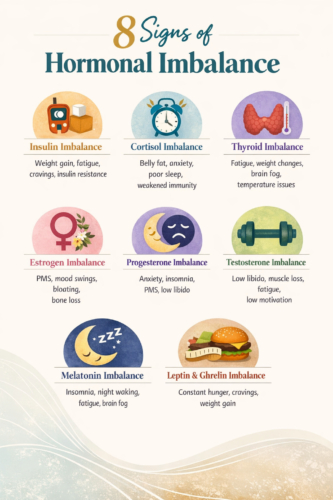
Hormonal Imbalance Symptoms – Insulin
Symptoms of insulin imbalances include weight gain, fatigue, and metabolic dysfunction, which lead to insulin resistance, prediabetes, and type 2 diabetes. Over time, unstable blood sugar levels can also increase cravings, promote fat storage, and make it more difficult for your body to use energy efficiently.
Hormonal Imbalance Symptoms – Cortisol
Chronic high cortisol leads to fatigue, weight gain (especially abdominal), sleep disturbances, anxiety or irritability, brain fog, sugar cravings, and weakened immunity. When cortisol remains elevated for prolonged periods, it keeps your body in a constant “fight-or-flight” state, preventing proper recovery and hormonal regulation.
Hormonal Imbalance Symptoms – Thyroid
Thyroid dysfunctions can show up as hypothyroidism (fatigue, weight gain) or hyperthyroidism (anxiety, weight loss). Because the thyroid controls your metabolism, even slight imbalances can significantly impact your energy levels, body temperature, and overall metabolic rate.
Hormonal Imbalance Symptoms – Estrogen
Low estrogen can cause hot flashes, dry skin, mood swings, fatigue, brain fog, and bone loss. High estrogen can lead to PMS, fibroids, weight gain, mood swings, water retention, and testosterone reduction in men. Imbalances in estrogen can also disrupt neurotransmitters like serotonin and dopamine, affecting mood and emotional stability.
Hormonal Imbalance Symptoms – Progesterone
Low levels of progesterone can cause anxiety, insomnia, PMS, miscarriage risk, irritability, and low libido. Since progesterone has a calming effect on the nervous system, low levels can leave you feeling more stressed, restless, and unable to fully relax.
Hormonal Imbalance Symptoms – Testosterone
Low testosterone can lead to fatigue, low libido, mood changes, loss of muscle mass, increased body fat, brain fog, and reduced motivation or energy levels. It also plays a key role in confidence, drive, and physical performance, so imbalances can affect both mental and physical vitality.
Hormonal Imbalance Symptoms – Melatonin
Symptoms of melatonin dysfunction include poor sleep, insomnia, night waking, daytime fatigue, mood changes, and reduced cognitive performance. Disruptions in melatonin can also interfere with your circadian rhythm, making it harder for your body to maintain a consistent sleep-wake cycle.
Hormonal Imbalance Symptoms – Leptin and Ghrelin
Problems with leptin and ghrelin can cause constant hunger, cravings, overeating, obesity, and metabolic syndrome. When these hunger hormones are dysregulated, your body struggles to recognize fullness, leading to increased calorie intake and difficulty managing weight.
Most people treat these symptoms separately…but they often stem from the same root: hormonal dysfunction.
Why Hormonal Health Is the Foundation of Well-Being
When people think about health, they often focus on exercise, diet, or weight loss, but hormones are the control system behind it all. Hormonal health is one of the foundations of how your body feels, functions, and performs.
Hormones regulate:
- Metabolism
- Energy levels
- Mood and mental clarity
- Fat storage and muscle growth
- Sleep cycles
- Reproductive health
If your hormones are off, nothing else works properly, no matter how perfect your diet or workouts are. This is why hormonal health is a cornerstone of any true wellness program.
A truly holistic approach to health goes beyond surface-level habits and addresses internal balance, helping understand hormonal imbalance causes and hormonal imbalance symptoms. This, along with hormone optimization, creates a state where your body can operate at its highest potential.
Hormonal Imbalances Causes
Before being able to balance your hormones, you should understand hormonal imbalance causes and why hormones become dysregulated in the first place.
Here are the most notable root causes of hormonal imbalances:
Chronic Stress & Cortisol Overload
A common cause of hormonal imbalances is stress. When you’re under constant stress, your body keeps cortisol, the primary stress hormone, elevated for prolonged periods. This ongoing cortisol overload can disrupt your sleep patterns, making it harder for you to fall asleep or stay asleep. It also signals your body to store more fat, especially around your midsection, and can suppress your reproductive hormones, impacting everything from libido to overall hormonal balance.
Blood Sugar Dysregulation
When your blood sugar is constantly spiking, often from consuming processed carbohydrates and sugary foods, your body is forced to produce higher amounts of insulin to bring those levels back down. Over time, this repeated cycle can lead to insulin resistance, meaning your cells no longer respond effectively to insulin.
As a result, your body produces even more insulin, creating a ripple effect that disrupts other hormones. This imbalance can impact everything from fat storage and energy levels to mood and cravings, ultimately throwing your entire hormonal system off track.
Poor Gut Health
When your gut health is compromised, it can directly disrupt your hormonal balance. Your gut plays a critical role in metabolizing hormones, especially estrogen, through what’s known as the estrobolome (the collection of gut bacteria involved in estrogen regulation). If your gut microbiome is imbalanced, estrogen may not be properly broken down and eliminated, leading to excess circulating levels.
At the same time, poor gut health increases inflammation in the body, which can interfere with hormone signaling and overall endocrine function. On top of that, if your digestion and absorption are impaired, you may not be getting the essential nutrients, like magnesium, zinc, and B vitamins, needed to produce and regulate hormones effectively. In other words, if your gut isn’t functioning optimally, your hormones won’t be either.
Toxin Exposure
Toxin exposure is one of the most overlooked root causes of hormonal imbalances. In your everyday environment, you’re constantly coming into contact with endocrine disruptors found in plastics, pesticides, personal care products, and household chemicals. These substances can interfere with your body’s natural hormone signaling by either mimicking hormones like estrogen or blocking their normal function.
Over time, this disrupts your internal balance, making it harder for your body to regulate metabolism, mood, energy, and reproductive health. Reducing your exposure to these toxins, by eating organic food, having a holistic skincare routine, drinking and bathing in filtered water, and limiting ultraprocessed food and toxic household chemicals, is a key step in supporting your hormonal health from the inside out.
Nutrient Deficiencies
Nutrient deficiencies can quietly disrupt your hormonal balance, even if everything else in your routine looks “healthy.” Your body relies on specific nutrients to produce, regulate, and signal hormones effectively. If you’re low in key nutrients like magnesium, zinc, or B vitamins, your body may struggle to manage stress, support metabolism, and maintain stable energy levels.
Healthy fats are just as essential, since hormones are built from cholesterol and fatty acids; without healthy fats, hormone production becomes impaired. If you’re not consistently fueling your body with nutrient-dense foods, you may be creating an internal environment where hormonal imbalances are more likely to develop.
Lack of Sleep or Poor Sleep
Lack of sleep or poor sleep is another cause of a hormonal imbalance. When you don’t get enough sleep, you disrupt one of your body’s most critical repair systems. Sleep is the time when your hormones reset and rebalance—especially cortisol, growth hormone, and insulin sensitivity. If you’re consistently sleep-deprived, your cortisol levels can stay elevated, your recovery and muscle repair decline, and your body becomes less efficient at regulating blood sugar.
Over time, this creates a cascade of imbalances that can affect your energy, metabolism, mood, and overall health. Establishing a consistent sleep hygiene routine helps support optimal hormonal regulation and deeper, more restorative sleep.
👉🏻 If you want a deeper, data-driven understanding of your hormonal health, learn how testing can help you identify imbalances and optimize your energy and vitality in this guide: Hormone and Wellness Testing to Boost Energy and Vitality
Conclusion
Hormonal imbalance is not just about one symptom; it’s a reflection of how your body is functioning as a whole. When something is off internally, your body communicates through signs like fatigue, weight changes, mood shifts, and poor sleep. Instead of chasing symptoms, the real solution is to understand hormonal imbalance causes. Stress, blood sugar dysregulation, gut health, toxins, nutrient deficiencies, and sleep all play a role in shaping your hormonal landscape. The more you understand your root causes and hormonal imbalance symptoms, the more empowered you become to address the real problem, not just manage the surface-level effects. And once you understand what’s driving your hormonal imbalance, the next step is knowing exactly how to balance hormones naturally using a structured, holistic approach.
To a Fitter Healthier You,
Mind-Body Optimization Specialist
About the Author
Adriana Albritton is a Mind-Body Optimization Specialist and the founder of FitnAll Coaching. She developed the FITNALL Method, a holistic framework that integrates fitness, internal health, thought patterns, nutrition, adaptation, longevity, and lifestyle habits to support sustainable fat loss and long-term wellness. Adriana is the author of 28 Days to a New Life: A Holistic Program to Get Fit, Delay Aging, and Enhance Your Mindset. She speaks and writes about holistic performance, longevity, and the integration of mind and body for optimal health.