Lower back pain affects millions of people and is one of the top reasons for missed work, doctor visits, and reduced quality of life. Whether your discomfort comes from sitting too long, poor posture, muscle imbalances, or lifting injuries, the right exercises can provide meaningful relief. Targeted movements help strengthen your core, improve mobility, reduce stiffness, and support your spine, which are essential for easing pain naturally. Below are the 10 best exercises for lower back pain relief, how to perform them correctly, and why they work.
Pelvic Tilts
Pelvic tilts are one of the most effective beginner-friendly exercises for lower back pain relief because they gently activate the deep abdominal muscles that stabilize the spine. Many people develop pain from weak core muscles or prolonged sitting, which causes the pelvis to tilt forward and strain the lower back.
By repeatedly flattening your back into the floor, you retrain your body to find a more neutral pelvic position. Over time, pelvic tilts help reduce pain from weak or inactive core muscles, improve posture, relieve stiffness, and enhance stability, making daily tasks like walking, bending, and lifting feel easier and less painful.
👉🏻 How to Do Pelvic Tilts
Cat-Cow Stretch
The Cat-Cow is a classic stretch for lower back pain relief. This mobility exercise increases spinal flexibility and reduces tension built up from poor posture or long hours at a desk. As you move between arching and rounding your spine, you warm up the muscles around the lumbar region while improving circulation to the discs.
This stretch helps decompress the lower back, release tightness in the chest and shoulders, improve spinal mobility, loosen tight back muscles, reduce tension, and encourage better body awareness. Practicing Cat-Cow regularly can also improve breathing mechanics, which plays an overlooked role in reducing chronic back discomfort.
👉🏻 How to Do Cat-Cow Stretches
Child’s Pose
Child’s Pose is another great exercise for lower back pain. This restorative stretch for the spine, hips, and glutes gently lengthens the spine while allowing your lower back muscles to fully relax. The position opens the hips, glutes, and lower back, which often hold tension when you sit for long periods or experience stress. Because this pose is passive and soothing, it encourages relaxation of the nervous system, which can significantly reduce pain sensitivity.
Child’s Pose is an excellent exercise to reset your body between workouts, before bed, or anytime your back feels tight. Many people feel immediate relief as their spine elongates and decompresses.
👉🏻 How to Do Child’s Pose
Glute Bridges
The glute bridge is a powerful exercise for lower back pain. It strengthens the glutes, hamstrings, and core, all of which play a crucial role in supporting the lower back. Weak glutes are one of the most common contributors to back pain because they force the lumbar spine to absorb more stress during movement. By lifting your hips and creating a straight line from shoulders to knees, you train your muscles to work together efficiently.
Regular glute bridging provides lower back pain relief, helps improve pelvic alignment, reduces pressure on the lumbar region, and enhances stability during daily activities like climbing stairs or carrying groceries.
👉🏻 How to Do Glute Bridges
Knee-to-Chest Stretch
The knee-to-chest stretch also provides lower back pain relief. This simple but effective stretch targets the lower back, glutes, and hips – a trio of areas often responsible for stiffness and discomfort. When you pull your knee toward your chest, you gently stretch the muscles that attach to the pelvis, helping reduce compression in the lumbar spine.
The knee-to-chest stretch also improves blood flow to the lower back, which can accelerate recovery after workouts or long periods of sitting. It’s a great exercise for reducing tension from tight hip flexors or sciatica-like pain, and it’s safe for most people, even beginners.
👉🏻 How to Do Knee-to-Chest Stretches
Bird Dog
The Bird Dog is another exercise for lower back pain. This exercise builds strong, coordinated core muscles, which are essential for protecting the lower back from injury. As you extend opposite limbs, you challenge your body to maintain balance and spinal alignment; these skills directly translate to healthier movement patterns.
This exercise strengthens the multifidus, a deep spinal stabilizer muscle that often becomes inactive in people with chronic back pain. By training stability instead of just flexibility, Bird Dog builds balance and spinal control, improves the body’s ability to withstand daily activities, reduces flare-ups, and promotes long-term resilience.
👉🏻 How to Do Bird Dogs
Standing Hamstring Stretch
Another exercise for lower back pain is the standing hamstring stretch. Tight hamstrings are a major contributor to lower back pain because they pull on the pelvis, forcing the spine into an unnatural alignment. The standing hamstring stretch helps lengthen these muscles, improving flexibility and reducing stress on the lumbar region. By elevating your heel and keeping your back straight, you ensure that the stretch targets the posterior chain safely.
The standing hamstring stretch can give you lower back pain relief by improving mobility in the hips, which are essential for healthy walking, bending, and lifting patterns. Consistently stretching the hamstrings can dramatically reduce recurring back tightness.
👉🏻 How to Do Standing Hamstring Stretches
Wall Sits
Another exercise for lower back pain is the wall sit. Wall sits are a low-impact strengthening exercise that builds endurance in the core, glutes, and legs; all these areas are essential for maintaining a strong and stable lower back. Because you’re supported by the wall, the spine stays in a neutral position, building leg and core endurance without compressing the spine and making this a safe option for individuals who experience discomfort during traditional squats.
Holding the seated position engages the muscles that support your pelvis and lower spine, helping reduce pain caused by weakness or poor posture. Wall sits also improve lower-body strength, which enhances balance and stability during everyday movements.
👉🏻 How to Do Wall Sits
Seated Spinal Twist
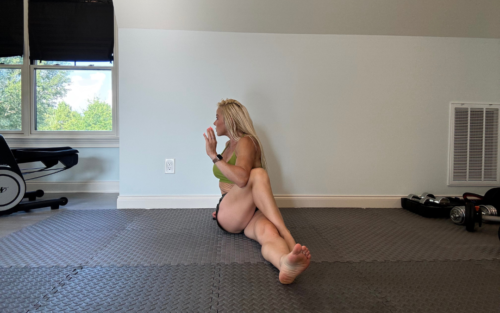
A seated spinal twist is another excellent exercise for lower back pain. This stretch for improving rotational mobility, increasing flexibility and relieving muscle tension along the spine, hips and lower back. Twisting helps gently decompress the vertebrae while targeting the muscles surrounding the lower back and hips. Many people store stress in these areas, leading to tightness and reduced mobility.
The spinal twist also stimulates circulation and helps rehydrate spinal discs, which is essential for maintaining long-term spinal health. Performing this exercise regularly can enhance posture, improve digestion due to the gentle abdominal massage, and provide overall relief from stiffness.
👉🏻 How to Do Seated Spinal Twists
Piriformis Stretch
The piriformis stretch is a great exercise for lower back pain. The piriformis muscle is small but powerful muscle that when it becomes tight, it can irritate the sciatic nerve. This can lead to pain that radiates into the lower back and legs. The piriformis stretch provides lower back pain relief since it helps relax the piriformis muscle and open up the hips, providing relief from sciatica-like symptoms and general back stiffness.
By crossing one ankle over the opposite knee and pulling gently inward, you create a deep stretch that targets hidden tension. Improving piriformis flexibility also enhances hip mobility, which reduces compensations that often strain the lumbar spine.
👉🏻 How to Do Piriformis Stretches
Pro Tips for Lower Back Pain Relief
- Start slow and focus on proper form.
- Stop any exercise that increases pain.
- Practice these movements daily for 5–10 minutes for best results.
- If pain worsens or persists, consult a healthcare provider or physical therapist.
- Pair exercise with good posture, quality sleep, hydration, stress management, and incorporate natural solutions for pain management for long-term improvement.
Conclusion
Lower back pain doesn’t have to control your daily life. With the right combination of stretching, strengthening, and mobility exercises, you can support your spine, reduce discomfort, and restore proper movement patterns. The ten exercises above offer a powerful foundation for improving lower back health—whether your pain comes from sitting too long, lifting incorrectly, or general muscle tightness. The key is consistency. Just a few minutes each day can lead to meaningful relief, better posture, and a stronger, more resilient body. If your pain persists or worsens, consider working with a physical therapist or healthcare professional to tailor a routine that fits your needs and goals.
Frequently Asked Questions
Exercises that provide the fastest relief are the ones highlighted above. These movements gently loosen tight muscles, improve mobility, and reduce pressure on the spine. For long-term relief, continue strengthening your core.
Can stretching really help lower back pain?
Yes. Stretching helps release tight muscles in the hips, hamstrings, and lower back. These are the areas that commonly contribute to pain. Gentle stretching also improves blood flow and reduces stiffness, making it one of the most effective natural remedies. Consistency is key to seeing results.
How often should I do lower back pain exercises?
Aim to perform these exercises 5–10 minutes per day. Daily practice helps maintain flexibility, strengthen supportive muscles, and prevent recurring pain. Even just a few minutes of stretching and core activation can make a noticeable difference over time.
Is it okay to exercise if my lower back hurts?
In most cases, gentle movement is beneficial and may reduce pain. Avoid high-impact activities and any exercise that increases discomfort. If the pain is severe, accompanied by numbness, tingling, or weakness, consult a doctor or physical therapist before continuing.
What causes lower back pain in the first place?
Common causes include prolonged sitting, weak core and glute muscles, poor posture, tight hamstrings, stress, and improper lifting techniques. Sometimes pain also results from more specific conditions like herniated discs, sciatica, or arthritis. Identifying the cause helps determine the best exercise approach.
Can these exercises help with sciatica?
Some of the exercises, like the Piriformis stretch, Knee-to-Chest, and Cat-Cow, can help relieve sciatica symptoms by reducing nerve compression and loosening tight hip and glute muscles. However, if symptoms are severe or persistent, seek professional guidance.
Should I warm up before doing lower back exercises?
A gentle warm-up is helpful but not required. Light activities such as walking in place, hip circles, or slow marching for 1–2 minutes can loosen the muscles and improve circulation, allowing you to stretch more comfortably and safely.
Are these exercises safe for beginners?
Yes. All exercises listed are low-impact, beginner-friendly, and designed to be performed at home without equipment. Start slowly, avoid forcing movements, and progress as your flexibility and strength improve.
When should I see a doctor for lower back pain?
Seek medical help if your pain lasts longer than 4–6 weeks, worsens over time, or is accompanied by leg weakness, numbness, bowel/bladder changes, or severe nighttime pain. These may indicate an underlying medical condition that needs professional evaluation.
Can strengthening my core help prevent future back pain?
Absolutely. A strong core supports your spine, improves posture, and reduces the strain on your lower back during daily activities. Some of the above exercises are excellent for building the type of deep core stability that protects your back long term.
To a Fitter Healthier You,
The Fitness Wellness Mentor
About the Author
Adriana Albritton has a Master’s in Forensic Psychology, certifications in personal training, nutrition, detoxification, and is the founder of FitnAll Coaching and blog. She is the author of 28 Days to a New Life: A Holistic Program to Get Fit, Delay Aging, and Enhance Your Mindset, and a coauthor of The Better Business Book Volumes II and III. With a background in mental health, Adriana brings a holistic, science-backed approach to wellness. She combines mindset coaching, fitness, and nutrition to help people stay lean, energized, healthy, and centered. As part of Health Six FIT, she’s also helping reshape healthcare through AI-driven, integrative wellness education.