Many people think they need an expensive gym membership to get in shape, but some of the best workouts happen outside. Parks, trails, beaches, neighborhood sidewalks, and even your backyard can become your personal training space. Outdoor exercise combines the physical benefits of movement with the mental benefits of spending time in nature. Whether your goal is weight loss, muscle building, improved endurance, or simply becoming more active, outdoor workouts offer an effective and affordable solution. Discover the best outdoor exercises for strength, cardio, and weight loss.
Key Takeaways
- Outdoor exercises are an effective way to improve cardiovascular fitness, build strength, burn calories, reduce stress, and support long-term health without needing a gym. Whether you prefer walking, running, hiking, cycling, or bodyweight workouts in the park, outdoor exercise provides physical and mental health benefits while making fitness more enjoyable and sustainable. This guide covers the best outdoor exercises, workout routines, safety tips, and how to create a personalized outdoor fitness plan.
Table of Contents
- Benefits of Outdoor Exercise
- Why Outdoor Workouts Are So Effective
- Best Outdoor Exercise Activities
- Best Outdoor Bodyweight Exercises
- Outdoor Workout Routine for Beginners
- Intermediate Outdoor Workout
- Advanced HIIT Outdoor Workout
- Outdoor Workout Safety Tips
- Frequently Asked Questions
- Create Your Personalized Outdoor Workout with FITNALL
Benefits of Outdoor Exercises
Research suggests that exercising outdoors, especially in natural settings such as parks, forests, and trails, may enhance mood, reduce perceived stress, increase enjoyment of physical activity, and improve long-term exercise adherence. These psychological benefits can make it easier to maintain a consistent fitness routine and support overall well-being.
Here are additional benefits of the best outdoor exercises:
1. Improves Mental Health
Exercise naturally releases endorphins, while spending time in green spaces has been associated with lower stress levels and improved emotional well-being. Many people report feeling calmer, more energized, and more focused after exercising outdoors.
Outdoor workouts may help reduce stress, improve mood, lower anxiety, increase mental clarity, and improve sleep quality.
2. Burns More Calories
Outdoor terrain constantly changes, making it more challenging. Unlike a treadmill, sidewalks, hills, trails, grass, and sand require your body to stabilize itself continuously, activating additional muscles and increasing energy expenditure.
3. Improves Balance and Coordination
Uneven surfaces recruit stabilizing muscles that often remain underused during machine-based workouts. This helps improve balance, coordination, functional strength, and joint stability.
4. Provides Vitamin D
Spending time outdoors allows your body to produce vitamin D through sunlight exposure. Vitamin D supports bone health, muscle function, immune health, and mood regulation.
5. Increases Exercise Adherence
One of the biggest reasons people quit exercising is boredom. Outdoor workouts provide changing scenery, fresh air, and new challenges that make workouts more enjoyable.
When exercise becomes enjoyable, consistency improves.
6. Saves Money
Many outdoor workouts require nothing more than comfortable shoes and your body weight. No gym membership required.

Best Outdoor Exercise Activities
Not every outdoor workout needs to be high intensity.
Here are some excellent options:
Walking
Walking is the perfect exercise since it is low impact and can be done anywhere and by anyone, even beginners. Some benefits include burning calories, improving cardiovascular health, and it hhhhhhhhis great for recovery days
Jogging or Running
Excellent for improving endurance and cardiovascular fitness.
Trail Running
Adds hills and uneven terrain for a greater challenge.
Hiking
One of the best full-body endurance activities while allowing you to enjoy nature.
Cycling
Builds leg strength while improving cardiovascular fitness.
Swimming
Provides a full-body workout with minimal stress on the joints.
Canoeing or Kayaking
Excellent for developing upper-body and core strength.
Rollerblading
Improves balance while providing an enjoyable cardio workout.
Rock Climbing
Develops grip strength, upper-body power, flexibility, and problem-solving skills.
Outdoor Sports
Examples include: basketball, tennis, volleyball, pickleball, soccer, and baseball. Sports improve fitness while adding a social component.
Best Outdoor Exercises Without Equipment
Here is the list of the best outdoor exercises for strength, cardio and weight loss:
- Muscles worked: Chest, shoulders, core, legs, and glutes.
- Benefits: Builds total-body strength, burns calories quickly, and improves conditioning.
- Improve: Balance, leg strength, and hip mobility.
- This plyometric exercise involves an all-out effort while jumping forward
- Improve: Explosive strength, power, and athleticism
- Exercise for the whole body.
- Great for: shoulder endurance, cardio, and core strength
- This core exercise combines core strengthening with cardiovascular conditioning.
- This plank variation is an ab exercise that also targets the lower back, lower and upper body. It’s a whole-body exercise that accelerates your metabolism and gets you stronger.
- This plyometric exercise targets the whole body (legs, the upper body, and the core), and it is great for conditioning.
- A joint-friendly variation that emphasizes the glutes and hamstrings.
- Excellent for strengthening muscles often neglected during traditional leg workouts (abductors, adductors, hip flexors, and stabilizing muscles).
- Great plyometric move.
- Develops: Balance, posterior chain strength, and coordination.
- Help strengthen the abdominal muscles while improving core endurance.
- Stronger core muscles help alleviate and even prevent back pain and injuries.
- Funtional exercise
- Strengthen: Quadriceps, hamstrings, glutes, and core.
- An excellent cardio finisher that elevates heart rate quickly.
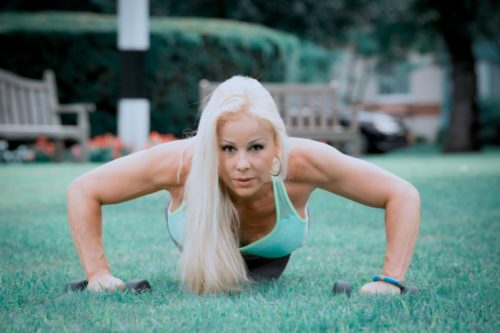
- Strengthens: Triceps, chest, and shoulders.
- One of the best upper-body exercises.
- Targets: Chest, triceps, shoulders, and core.
Outdoor Workout Routine
After looking at the list of the best outdoor exercises, you can choose a few of them and perform them in a circuit fashion (one after another), and repeat them three to five times.
Here are some outdoor workout routine examples:
Beginner Outdoor Workout
Complete three rounds.
- 12 Bodyweight Squats
- 10 Push-ups (modify on a bench if needed)
- 12 Walking Lunges (each leg)
- 20-second Plank
- 5-minute brisk walk
Intermediate Outdoor Workout
Repeat four rounds.
- 15 Burpees
- 20 Squats
- 15 Push-ups
- 20 Mountain Climbers
- 15 Bench Dips
- 30-second Plank
Rest 60 seconds between rounds.
Advanced Outdoor HIIT Workout
Perform 40 seconds of work followed by 20 seconds of rest.
Complete five rounds.
- Burpees
- Jump Squats
- Broad Jumps
- Mountain Climbers
- Push-ups
- Sprint
- Walking Lunges
Outdoor Workout Safety Tips
Now that you have an outdoor workout routine, follow these tips to be safe when exercising outdoors:
- Warm up for 5–10 minutes.
- Stay hydrated.
- Wear supportive footwear.
- If you are going to be outdoors for long periods, apply a non-toxic sunscreen.
- Dress appropriately for the weather.
- Exercise during cooler parts of the day in hot climates.
- Be aware of uneven terrain.
- Carry identification and a phone if exercising alone.
Why Consistency Matters More Than Perfection
The best outdoor exercises aren’t necessarily the hardest ones, but the ones you’ll continue doing consistently. Many people abandon their fitness goals because they rely on motivation alone. Sustainable change comes from building habits that fit your lifestyle, whether you’re exercising at the gym, at home, or outdoors.
Outdoor workouts can be an excellent way to make exercise more enjoyable, reduce boredom, and create a routine that lasts.
Train Smarter with the FITNALL App
Looking for a personalized outdoor workout instead of guessing what to do each day?
The FITNALL app combines fitness, nutrition, mindset coaching, stress management, recovery, and healthy habit formation into one personalized platform. Whether you prefer working out outdoors, at home, or in the gym, FITNALL adapts your plan to your goals, fitness level, available equipment, and lifestyle.
Instead of following another generic workout, you’ll receive guidance designed to help you build sustainable habits and achieve lasting results.
Ready to take your outdoor workouts to the next level? Explore the app FITNALL: Mind-Body Recode System and discover a more personalized approach to fitness, nutrition, and long-term health.
Conclusion
The best outdoor exercises prove that you don’t need an expensive gym membership or complicated equipment to improve your health. Whether you enjoy walking through your neighborhood, hiking scenic trails, cycling, practicing yoga in the park, or completing a challenging bodyweight workout, exercising outdoors can help you build strength, improve cardiovascular fitness, burn calories, reduce stress, and support your overall well-being.
The key to long-term success isn’t finding the “perfect” workout; it’s finding activities you genuinely enjoy and can consistently make part of your lifestyle. By combining different outdoor activities with strength training, proper nutrition, quality sleep, and stress management, you can create a sustainable fitness routine that supports your health for years to come.
If you’re looking for more structure and personalized guidance, the FITNALL app can help. It creates customized fitness, nutrition, mindset, and wellness plans based on your goals, experience level, and lifestyle. Whether you prefer training outdoors, at home, or in the gym, the app gives you a system and provides the tools and accountability to help you stay consistent and build healthy habits that last.
The best time to start is today. Step outside, enjoy the fresh air, challenge your body, and discover how outdoor exercise can help you become stronger, healthier, and more resilient—one workout at a time.
Frequently Asked Questions
Yes. Outdoor workouts can improve cardiovascular fitness, strength, endurance, balance, and calorie expenditure. While gyms offer more equipment for progressive overload, bodyweight exercises, hills, resistance bands, and park equipment can provide highly effective training.
The best outdoor exercises include walking, jogging, hiking, cycling, burpees, mountain climbers, jump squats, and circuit-style bodyweight workouts. These are excellent choices because they combine cardiovascular exercise with strength training to maximize calorie burn.
Yes. Bodyweight exercises such as push-ups, pull-ups, lunges, squats, dips, and plyometric movements can build muscle, especially when you progressively increase the difficulty, repetitions, or resistance.
Aim for at least 150 minutes of moderate-intensity aerobic activity or 75 minutes of vigorous activity each week, along with two or more days of strength training targeting all major muscle groups. Mixing walking, running, bodyweight exercises, and recreational sports can help you meet these recommendations while keeping your workouts enjoyable.
To a Fitter Healthier You,
Mind-Body Optimization Specialist
About the Author
Adriana Albritton is a Mind-Body Optimization Specialist and founder of FitnAll Coaching. She developed the FITNALL Method, a holistic framework that integrates fitness, internal health, thought patterns, nutrition, adaptation, longevity, and lifestyle habits to support sustainable fat loss and long-term wellness. Adriana is the author of 28 Days to a New Life: A Holistic Program to Get Fit, Delay Aging, and Enhance Your Mindset. She speaks and writes about holistic performance, longevity, and the integration of mind and body for optimal health.